For a PDF download see below:
There are hundreds, if not thousands of trees in Astley Park. Some comprise woodland areas, others stand separate from other trees. Most of the trees are within Great Wood which stretches along much of the southern edge of the Park. This is designated and protected as an Ancient Woodland which means it has existed since at least 1600. Other individual trees have been purposely planted to enhance the appearance of the Park. That process has occurred for hundreds of years from the time the Park comprised the private landscaped grounds of Astley Hall and continues to this day.
This Tree Trail picks out, with photographs, a selection of mainly freestanding trees, covering some of the Park’s more interesting species and specimens. It also displays images of their leaves and, in some cases, their nuts, flowers and bark.
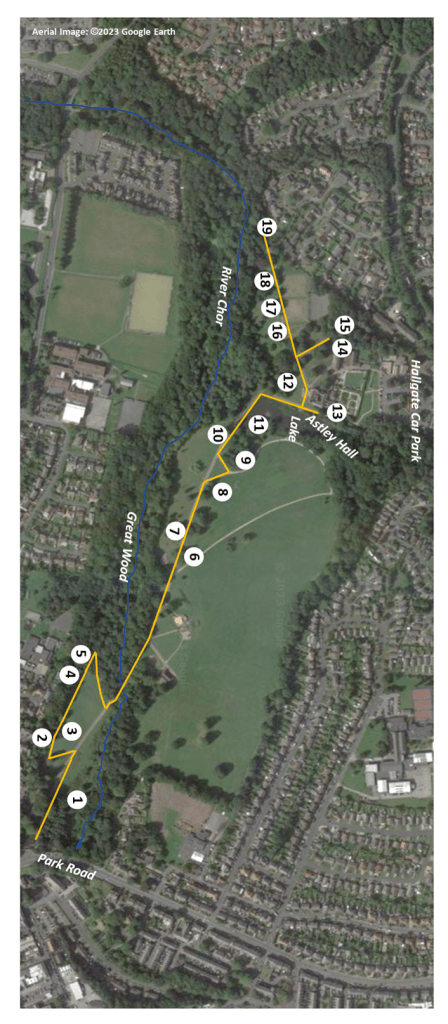
The Trail is presented as a self-guided walk that can be completed in about 30 minutes. The trees are listed in an order that starts from near the main gates at Park Road. It then proceeds past the Sensory Garden and then back to the main path where it crosses the River Chor. The Trail then continues along the main path towards Astley Hall before continuing down the side of the bowling greens and finishing next to the nearby River Chor bridge. However, the Trail can be followed in whatever direction you wish. All 19 trees included can be seen from made paths in the Park.
The precise locations of the trees featured are identified with Ordnance Survey grid references. Positions to view the trees from a path a short distance away are provided with what3words notations. Apps for grid references and what3words can be easily downloaded to mobile phones from well-known app stores.
LIST OF TREES FEATURED
(numbered from Park Road entrance – see Map below)
1. Silver Birch
2. Tibetan Cherry
3. Copper Beech
4. Norway Maple
5. Grey Willow
6. Turkey Oak
7. Common Beech
8. Hornbeam
9. Elm
10. Horse Chestnut
11. Hemlock
12. Common Lime
13. Magnolia
14. Swedish Whitebeam
15. Lebanon Cedar
16. Caucasian Lime
17. Bhutan Pine
18. Red Oak
19. Tulip Tree
Look out for signs like the one below on or near each tree. There is also a leaflet available you can use to record the trees you spot.
1. Silver Birch – Betula pendula
Grid Ref: SD 58230 17802
what3words: pulse.grit.button
Named after its white coloured papery bark, this species with its slender, graceful semi-weeping appearance and springtime catkins was dubbed the most beautiful of forest trees, the “Lady of the Woods” by Romantic Movement poet Samuel Taylor Coleridge (1772-1834). The small leaves turn a distinctive bold gold colour in autumn. It is a pioneer species that can rapidly colonise open ground and can grow up to 30 metres high, but maturity is reached at between 12 and 17 metres, meaning the one pictured, positioned opposite the Cenotaph is approaching maturity. Typically, Silver Birches live for approximately 100 years.

——————————————————————————————————-
2. Tibetan Cherry – Prunus serrula Tibetica
Grid Ref: SD 58054 17855
what3words: solve.drums.matter
Cherry trees, part of the rose family, have a wide range across the world stretching from North America, Europe through to China and Japan. Along with several other Cherry species, the Tibetan was introduced into Britain in the early 1900’s by Ernest Wilson and has particularly distinctive bark. Wilson was a noted explorer and one of numerous plant collectors employed over many years by Veitch Nurseries. They were based in Chelsea and Exeter and could trace their origins to before 1808. In recent times the Tibetan Cherry has won numerous horticultural honours including the Award of Garden Merit in 2002. Here in the Sensory Garden of Astley Park it makes for a very attractive feature. This species has a mature height of 5 to 8 metres and typically lives for between 50 and 75 years.

——————————————————————————————————-
3. Copper Beech – Fagus sylvatica f. purpurea
Grid Ref: SD 58121 17871
what3words: life.casino.these
The Beech family also includes the Oaks and together they make up the ‘royalty’ of broadleaved trees. The Oak is considered the king and the Beech the queen. Both species have various varieties. The Copper Beech is so named because of its leaf tint, and as such the tree has a very distinctive colour, which tends to get darker in late summer. It is a cultivated form of the Common Beech and is sometimes called the Purple Beech. This species matures at up to 22 metres high and typically has a lifespan of about 300 years.

——————————————————————————————————-
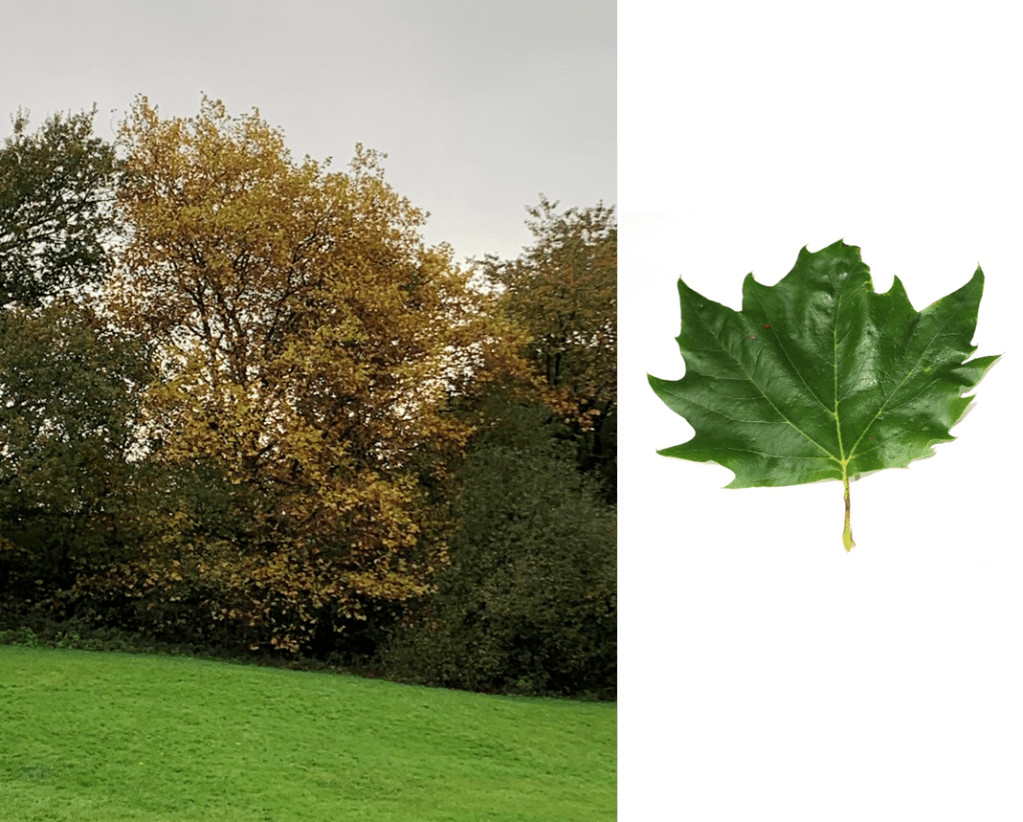
4. Norway Maple – Acer platanoides
Grid Ref: SD 57937 17878
what3words: unfair.link.option
Norway Maples are among the fastest growing, hardiest and least demanding of big trees. From the same family as the Sycamore, the Norway Maple is native to much of Europe but not Britain. This tree has yellow flowers in spring whilst the large pale green thin ‘fabric’ leaves turn golden in the autumn as pictured. The species has a life expectancy of up to 250 years and a mature height of 17 to 22 metres.
——————————————————————————————————-
5. Grey Willow – Salix cinerea oleifolia
Grid Ref: SD 57931 17891
what3words: flap.wisdom.long (note this tree is immediately next to the Norway Maple)
The Willow family is comprised of trees that are specially adapted to give the wind its seeds to sow. The lightweight seeds have a very short life before germinating which is why Willows favour moist ground. The painkiller Aspirin is derived from salicin, a compound found in the bark of all Willow species. The native grey Willow has been described as a ‘bit scruffy but full of charm’. It is one of the ‘Pussy’ Willows featuring catkins that appear before the leaves. These leaves are oval in shape but at least twice as long as they are wide. The catkins provide an important early in the year source of pollen and nectar for bees and other insects. Mature trees grow to about 10 metres high and have a life span of up to 75 years.

——————————————————————————————————-
6. Turkey Oak – Quercus cerris
Grid Ref: SD 57729 18104
what3words: civic.golf.depend
This highly durable species was introduced into the UK in 1735 from southeastern Europe and is now probably the fastest growing Oak in this country. Although not as important for wildlife as the native English Oak (of which there are numerous specimens in the Park), the Turkey Oak does provide a host for the Knopper Oak Gall Wasp. It has a characteristic rough fissured bark and distinctive acorns that have ‘hairy’ cups. The lifespan of this species can typically be up to around 300 years, growing up to 30 metres high.

——————————————————————————————————-
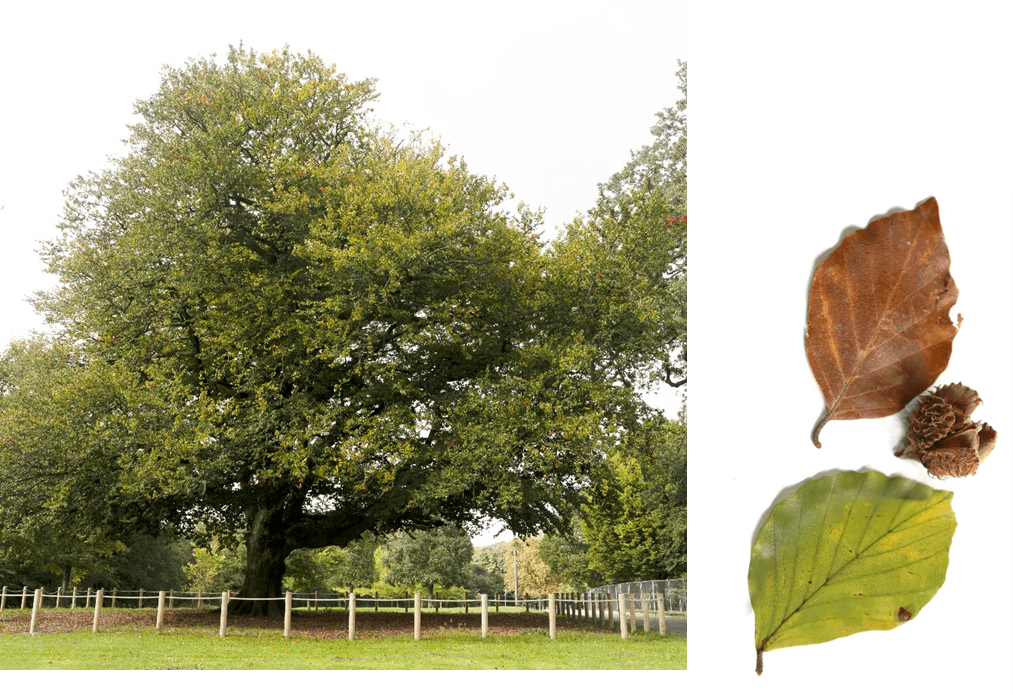
7. Common Beech – Fagus sylvatica
Grid Ref: SD 57656 18081
what3words: mixer.firms.tonic
Much of Great Wood in Astley Park is made up of this native tree. It is a very competitive species, aided by its shallow root system, which tends to starve out other species and so become dominant in a woodland setting. When grown in the open it tends to have low branches to help shade its trunk. In autumn the leaves typically turn the colour of golden burnt butter. Like the Oak with its acorns, the Common Beech produces husks known as ‘masts’ each comprising two nuts formed from the woody base of the female flower. Beech trees mature at between 17 to 22 metres high and can live for 300 years or more.
The specimen pictured is roped off to prevent people walking up close to the tree which is suffering from a fungal infection of the roots.
——————————————————————————————————-
8. Hornbeam – Carpinus betulus
Grid Ref: SD 57586 18131
what3words: sentences.fund.reveal
Hornbeams are similar in appearance to Beech trees with which they are often confused. However, the distinctive feature of Hornbeams is the hardness of the timber. Historically before iron became cheap and plentiful, the wood was used in machine cogs, axles and wheel spokes. More latterly uses have included mallets, skittles and the moving parts of pianos. This native species is often topiary clipped into lofty thin hedges. The oval, ribbed, serrated leaves turn clear yellow in autumn and can stay on the tree into winter. A mature height of up to 22 metres is typical but specimens can reach 30 metres and live to an age of around 300 years. The trees pictured are two of a set of four planted close together along the main path in the Park and each exhibit fine oval shapes.

——————————————————————————————————-
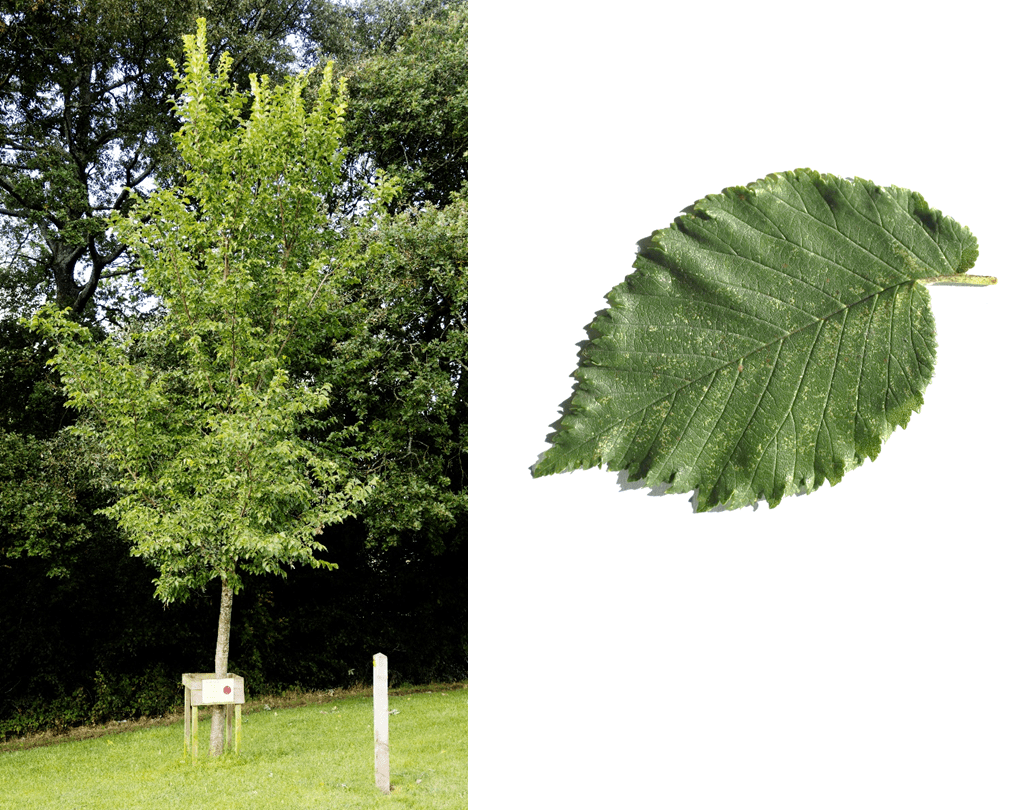
9. Elm – Ulmus lutece
Grid Ref: SD 57580 18160
what3words: games.holds.rice
There are many varieties of Elm and in recent decades some success has been achieved to create sub-species that are resistant to Dutch Elm Disease which is spread by a beetle invading the new ring of wood immediately under the bark. The now considered native English Elm (Ulmus procera) was likely introduced several thousand years ago. This species sets no fertile seeds but reproduces entirely from saplings springing up from the roots of old trees. The pictured specimen was specially planted in the Park by the Mayor of Chorley Cllr Doreen Dickinson on behalf of the Lower Burgh Meadow Conservation Group in 2016. It is one of ten such Elm trees planted around the Borough at that time and is one of the disease resistant sub-species. It could grow to 30 metres high and live for up to 200 years.
——————————————————————————————————-
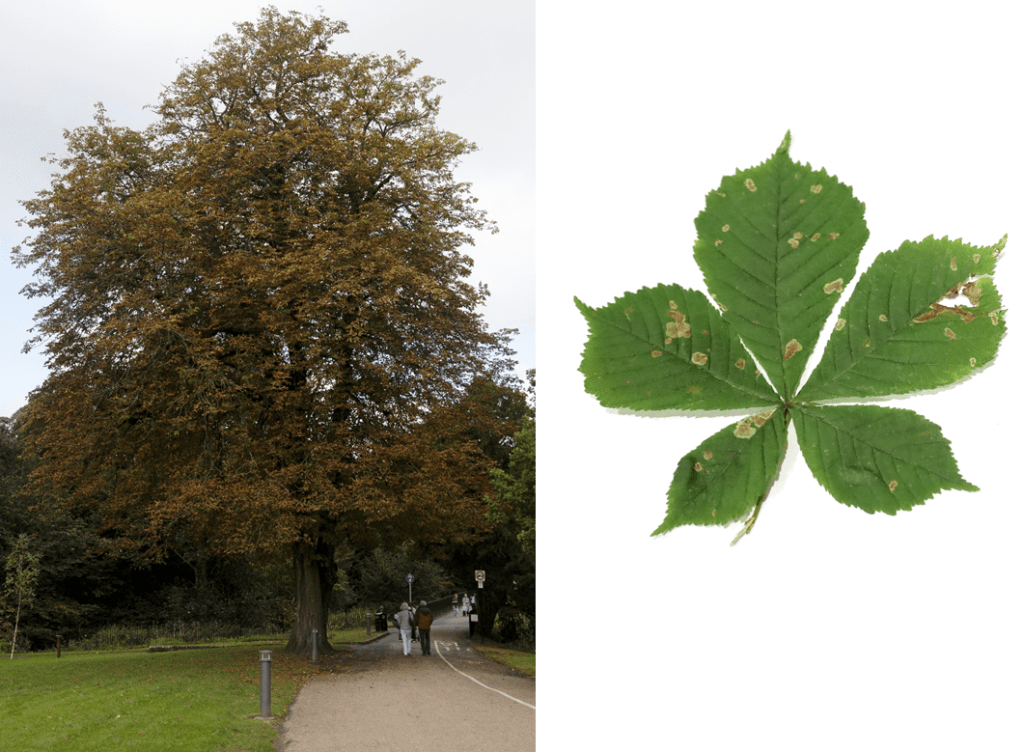
10. Horse Chestnut – Aesculus hippocastanum
Grid Ref: SD 57518 18187
what3words: pops.rent.toys
This much-loved, well-known tree species is not native to Britain, being introduced in the early 1600s from southeastern Europe. It has many distinctive characteristics – ‘sticky buds’ in spring, large candle shaped flowers in summer, whilst in autumn, it produces ‘conker’ nuts in spiky casings. Conkers contain chemicals used as additives in shampoos, as a starch substitute as well as in medicines to treat strains and bruises. The substance has also long been used in horse medicines and it is from this that the tree’s name may well be derived. The large distinctively shaped leaves are amongst the first of any deciduous species to appear in spring and change colour earliest in autumn, as in the image below. This species can reach 40 metres high and typically lives for 300 years or more.
——————————————————————————————————-
11. Hemlock – Tsuga
Grid Ref: SD 57503 18166
what3words: answer.chase.spaces
Not to be confused with the similar smelling herb of the same name, which is very poisonous, the unrelated tree species is not toxic. Hemlock trees have a similar leaf appearance to Yews but these conifers are more closely related to the spruces. None are native of Europe, they originate from North America and Asia. Introduced into Britain in 1852 the Western Hemlock(Tsuga heterophylla) is now the most common conifer found in the UK and isprobably the type pictured below in the Park. In the wild these Hemlocks can be very long lived – up to 800 years, and can reach a height of over 45 metres.

——————————————————————————————————-
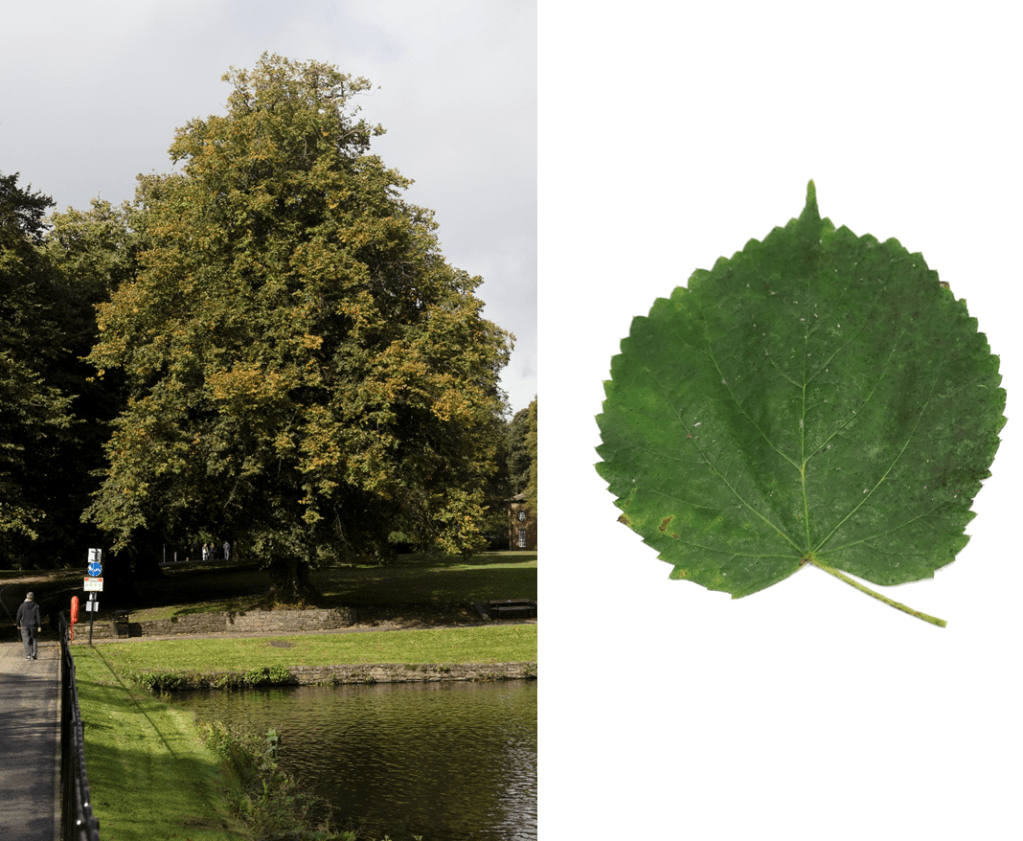
12. Common Lime – Tilia x europaea
Grid Ref: SD 57449 18236
what3words: bags.award.verge
The Common Lime is derived from a naturally occurring hybrid of large and small leaved varieties. It is a tree now characteristic of country house estates in Britain. It was introduced, probably from Dutch growers, in the 17th century. Its mid-summer combined male and female flowers emit a sweet-smelling scent. The heart-shaped leaves are soft and fine textured, but these attract a profusion of aphids and their many predators. This species can live for over 300 years and some older specimens have reached 50 metres in height making them amongst the tallest in Britain.
——————————————————————————————————-
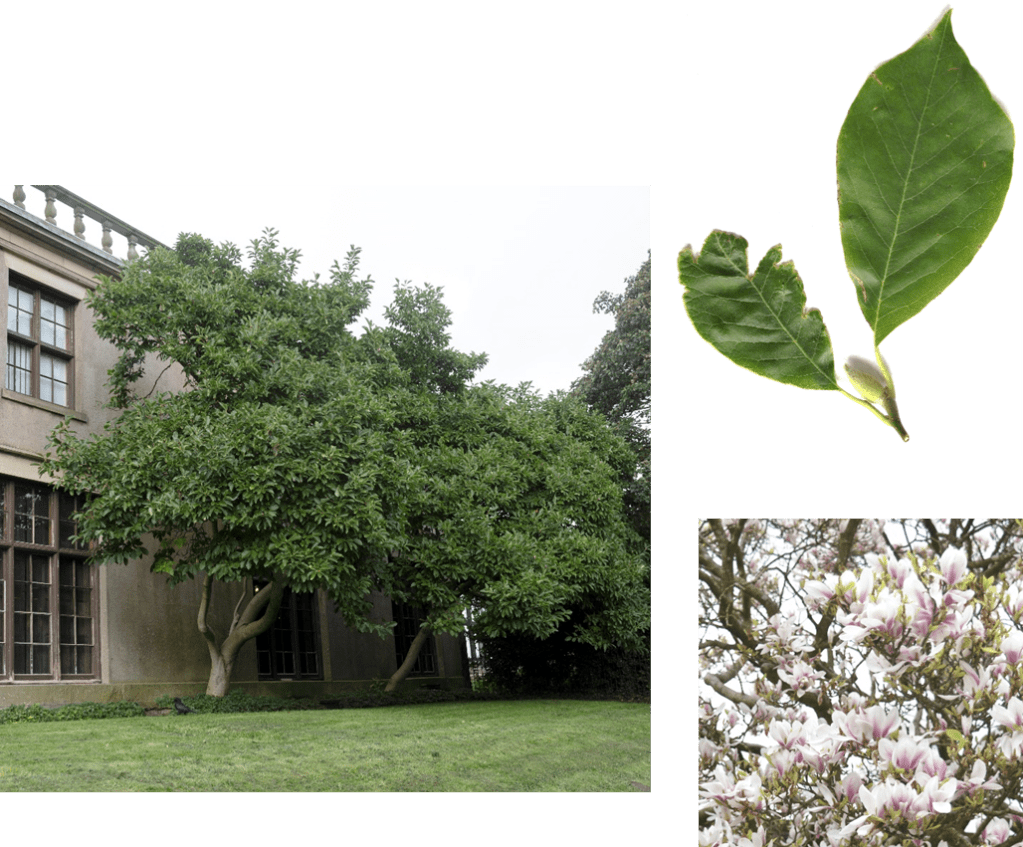
13. Magnolia – Magnolia
Grid Ref: SD 57469 18291
what3words: tribune.blitz.icon
There are estimated to be over 300 species of Magnolia and most originate from China and Japan, but some from the southeastern United States. Some of the American species can grow to a great height but those from eastern Asia tend to be more shrub size. Ancestors of modern Magnolias have been dated in fossil records to 95 million years ago. The one in Astley Park growing next to the eastern side of Astley Hall is probably a species from the subgenus Gwillimias. This specimen has white/pink flowers that appear in the spring before the leaves.
——————————————————————————————————-
14. Swedish Whitebeam – Sorbus intermedia
Grid Ref: SD 57362 18331
what3words: pints.saints.sand
Originating from Scandinavia and the Baltic countries this tree is now widely planted across northern Europe. Closely related to Pear trees and Mountain Ashes, the Swedish Whitebeam features white flowers in spring and orange-red berries on short stems in autumn. It rarely reaches a great height, maturing at between 7 and 12 metres high, living to an age of around 100 years.

——————————————————————————————————-
15. Lebanon Cedar – Cedrus libani
Grid Ref: SD 57350 18319
what3words: rewarding.copper.ally
The term ‘Cedar’ is commonly attributed to any tree with dark, spice-scented wood including many in America and Japan. However, of the four ‘true’ Cedar species, three originate from Mediterranean Europe and one from the Himalayas. The most famous species is the Lebanon Cedar and some celebrated such trees in their homeland have been estimated to be about 2,500 years old. Cedar wood is noted for its high durability in construction uses. It is also a source of an essential oil similar to turpentine and the timber has a quality effective as a clothes-moth repellent. The tree’s resin was used for mumification in ancient Egypt. Introduced into England in the 1640s, the Lebanon Cedar has 8 to 12 cm long barrel shaped reproductive cones produced every other year. The trees can grow to a height of 35 metres.

——————————————————————————————————-
16. Caucasian Lime – Tilia x euchlora
Grid Ref: SD 57340 18246
what3words: quench.times.define
This crossbreed Lime grows as tall as it is broad and is the most aphid-proof of all Limes. It has distinctive glossy leaves and quite elaborate yellow flowers that seem to have a narcotic effect on bees that can knock them to the ground. As the name suggests this tree originates in far eastern Europe. It has a mature height of 12 to 17 metres and typically lives for up to about 300 years.

——————————————————————————————————-
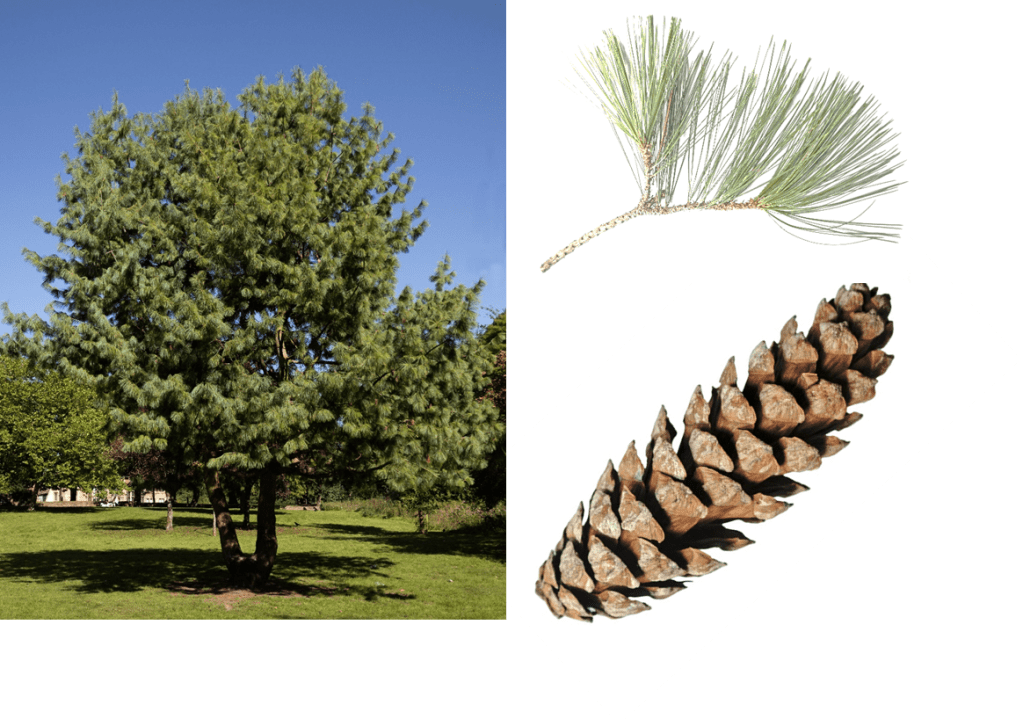
17. Bhutan Pine – Pinus wallichana
Grid Ref: SD 57321 18209
what3words: quench.times.define (can be seen from the same position as the Caucasian lime)
Pines are to conifers what Oaks are to broadleaves – the most widespread and most varied of their order. There are over 100 species of Pine found across North America, Asia and Europe. There is only one Pine species native to Britain – the Scots Pine. Pines are characterised by having long needled leaves arranged in tight bundles of from two to five needles each according to the species. Also indicative of the different species is the shape of the reproductive cones. The specimen pictured has needles 8 to 12 cm in length bundled in fives and has cones over 20cm long. The Bhutan Pine is a native of the Himalayas first brought to Britain in the early 1820s. This species matures at a height of 17 to 22 metres and typically lives up to 300 years.
——————————————————————————————————-
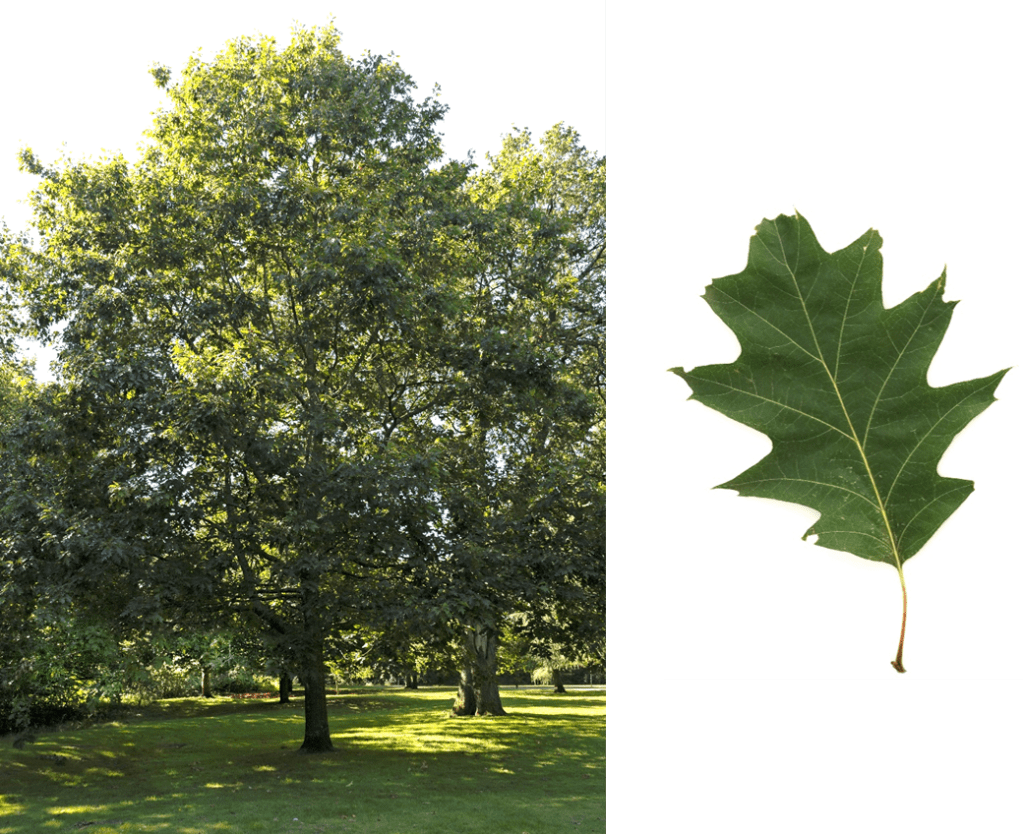
18. Red Oak – Quercus rubra
Grid Ref: SD 57293 18217
what3words: roofs.museum.never
There are numerous English Oak trees in Astley Park, a species that was once dominant across the whole of Britain and still covered over one-third of the island up until about 450 years ago. The Red Oak however is native of North America being introduced from there in 1724. Its leaves are larger than its native cousin and turn red-brown in autumn. The bark is rich in tannin – essential for tanning leather. Its acorns last two years on the tree and when they fall they wait until the following spring to germinate. This species has a mature height of 17 to 22 metres and can typically live for 300 years or more.
——————————————————————————————————-
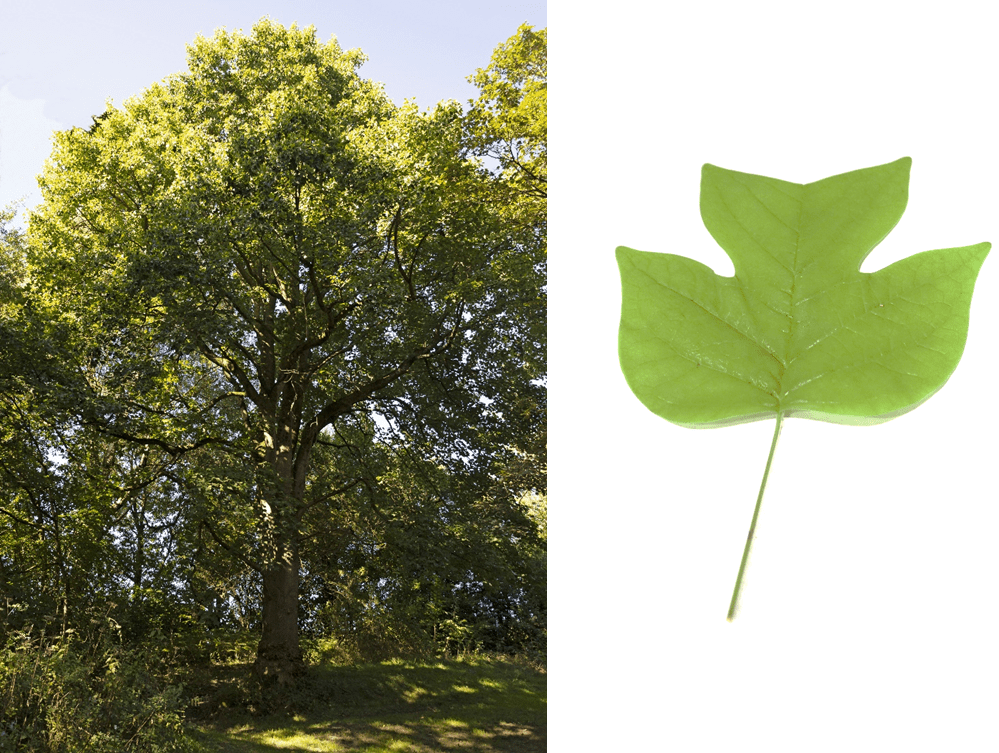
19. Tulip Tree – Liriodendron tulipifera
Grid Ref: SD 57163 18211
what3words: defeat.silly.causes
The Tulip Tree is considered the grandfather of the Magnolia family. It originates in North America where it is known variously as the Yellow Poplar or Whitewood and where its timber is often used in house interiors. The name ‘Tulip’ comes from its so shaped yellow flowers although these tend to be located high in the tree and so not clearly visible. It is claimed that excellent honey is derived from bees harvesting the tree’s nectar. Its bright green leaves are large and quite delicate, turning a clear, bright yellow in autumn. Tulip Trees are known to reach a great height in their homeland (up to about 60 metres). Such trees will be much older than the typical life expectancy of around 300 years. The pictured specimen is the only Tulip Tree in the Park.
——————————————————————————————————-
References:
Johnson, H. (1973) The International Book of Trees. London: Mitchell Beasley
Glover, M. (2009) Time for Trees – a guide to species selection for the UK. 4th edition. Ely: Barcham.
The Woodland Trust: woodlandtrust.org.uk
Wikipedia: wikipedia.org
 Friends of Astley Park