The first Astley Park Bat Walk and Talk of the year is taking place on the evening of Saturday 4th May starting at 8.30pm from the front door of Astley Hall. It will comprise a short talk by Harold Green of the Merseyside and West Lancs Bat Group followed by a guided walk to see and hear the bats.
There will be a charge of £2.00 for adults with under 16’s free – cash payment on the night. Numbers are limited so advance booking is essential – please contact Maurice on 01257 271507 or via emandbeejay@talktalk.net. The walk will finish at 10pm.
Please bring a torch and wear strong shoes. If you have a bat detector, please bring it.
If it is raining, the event will be cancelled, as the bats will not be flying.
During 2024 Friends’ volunteers are charting the incidence and distribution of the flora, fauna and fungi present in the Park by taking photographs of what wildlife they observe and sending them in for posting on our website. This opportunity to submit pictures is also open to website viewers – just tell us where in the Park you took the photographs. More important than picture quality is the record that is produced.
By better knowing what biodiversity exists we can more appropriately plan and carry out our practical tasks in the Park. All the photographs will be saved for easy future reference in the Gallery part of our website, but many will initially be featured in news posts like this one.
This first post in the series includes spring flowers, wildfowl on the lake, a fungus and a colourful beetle. Already this year Snowdrops and Daffodils have been featured in previous posts, however most of these specimens have grown from bulb stock that has been introduced into the Park. The Survey will concentrate on wild species.
Taking the opportunity to flower before the dense tree leaf canopy develops, Wood Anemones are now, in late March, blooming profusely in many locations alongside the main path from Ackhurst Lodge and elsewhere. See the picture below that also shows a Wild Garlic plant that will itself soon be flowering.
Less extensive are Celandines – in the same approximate location but again elsewhere in the Park, such as pictured below here under the Lime tree next to the lake.
The lake next to Astley Hall is also home to a variety of wild fowl. Pictured below is first a Mallard and then a pair of Canada Geese (PS both these birds have heads!).
Around the Park there are numerous tree stumps and laid down trunks. These offer ideal opportunities for fungi to grow. Pictured below is a colony of Bracket Fungi on a stump next to the Hallgate car park just outside the Walled Garden.
Finally in this post is an insect specimen admittedly seen last year near the Green Pond behind the Lost Fountain. It is a Hawthorne Shieldbug which is about 1.5cm long – see below.
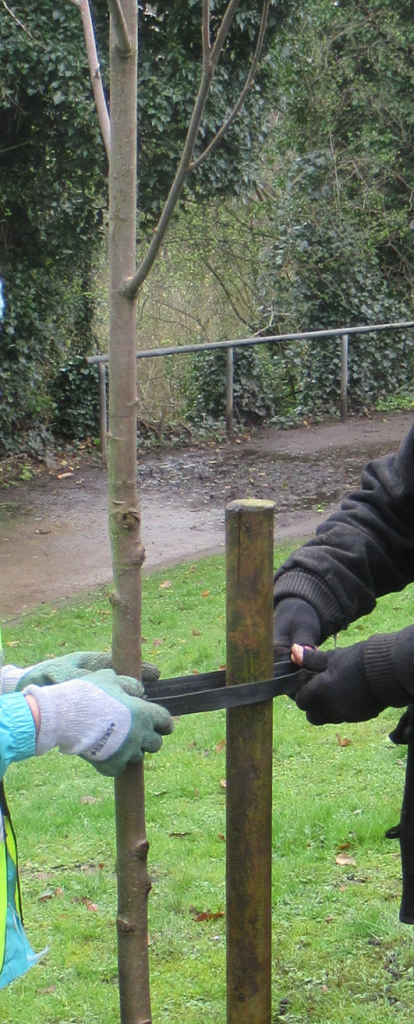
Over the past couple of days, Friends’ volunteers have planted numerous trees in the park. The saplings were provided by Chorley Council along with the necessary stakes and tree straps.
Last week a class of 30 Year 5 pupils from St Laurence’s C of E Primary School supervised by four teaching staff members and assisted by three Friends’ volunteers took part in a litter pick in the Park. Equipped with litter picker tools and bags supplied by Chorley Council the children carried out their task with much enthusiasm!
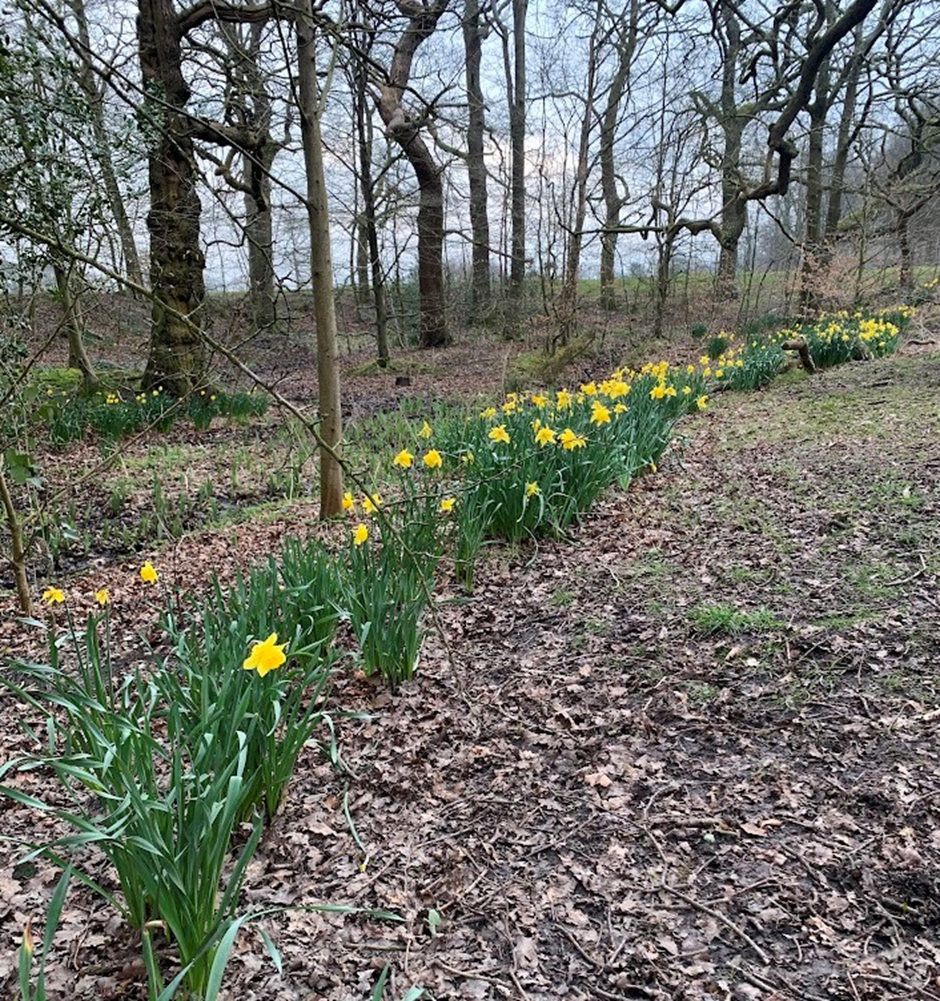
This year seems to be an especially good year for daffodils in the Park. Over the years many bulbs have been planted by Friends’ volunteers and now they are making a great show. See the Gallery for more daffodil pictures.
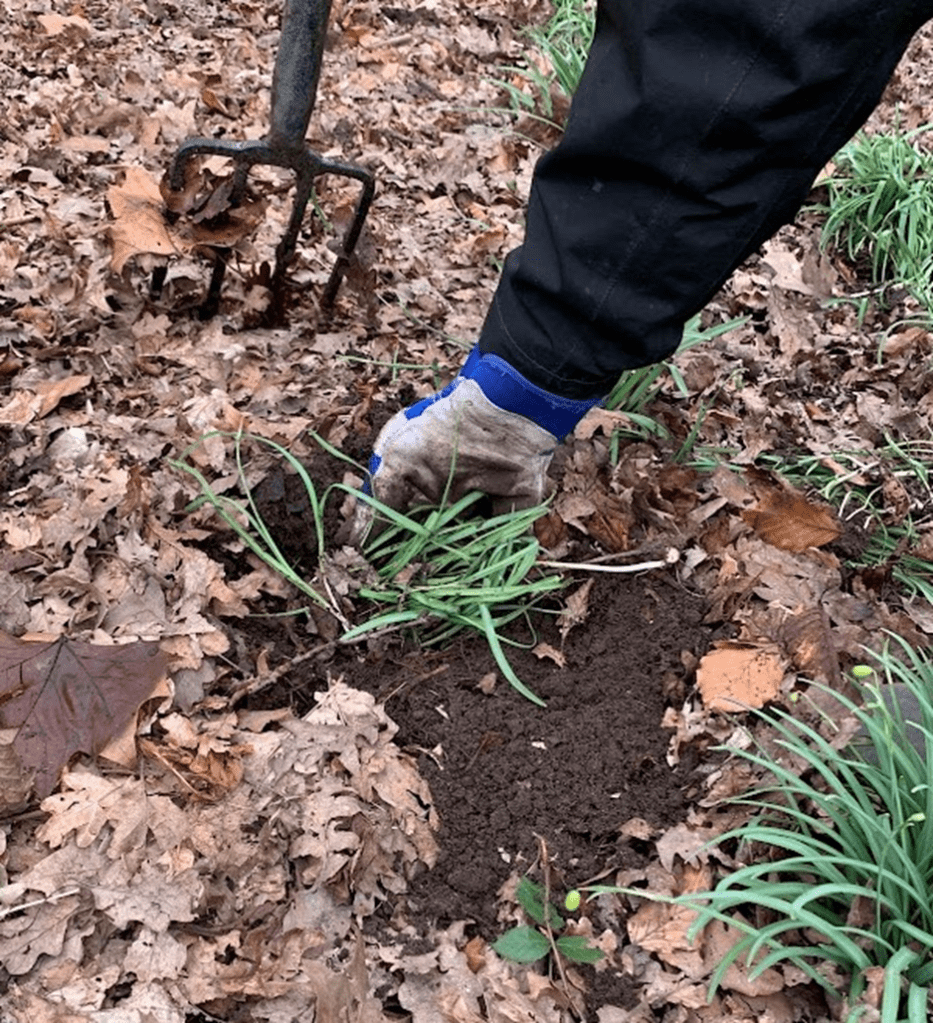
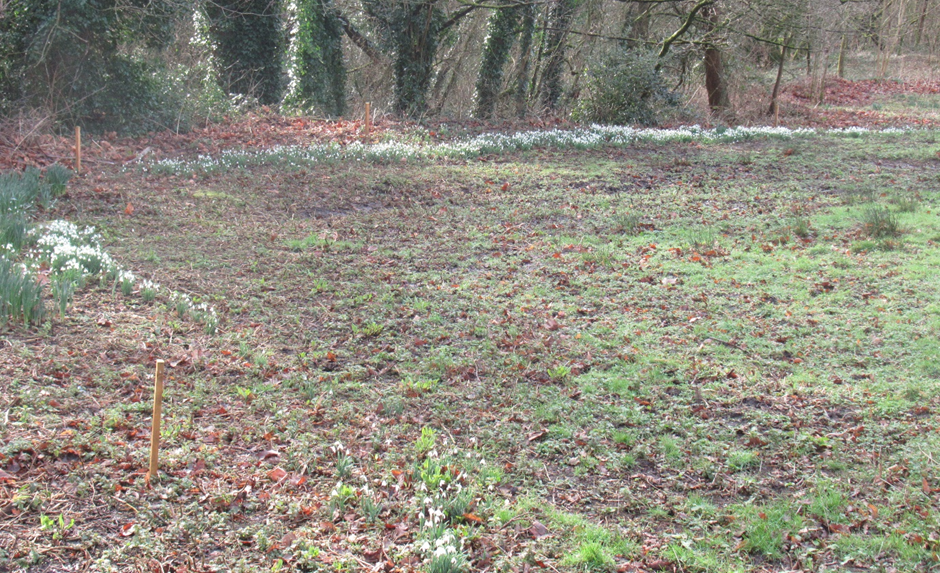
Last Spring, Friends volunteers transplanted dozens of clumps of ‘green’ – ie post-flowering – snowdrop plants to fill in gaps along the Snowdrop Trail. This turned out well in January/February this year with a much improved show. Spurred on by this, more plants have been split up and moved to further extend the display for next year.
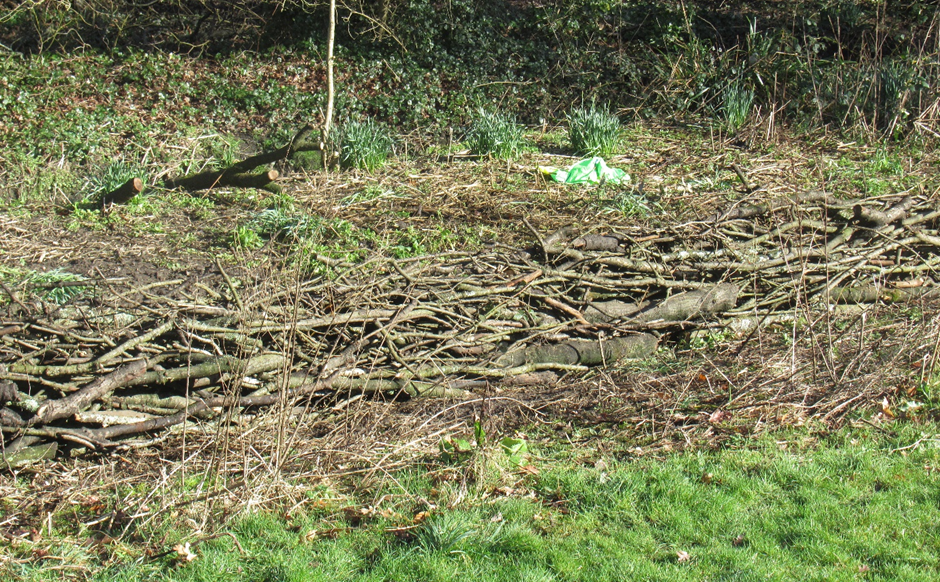
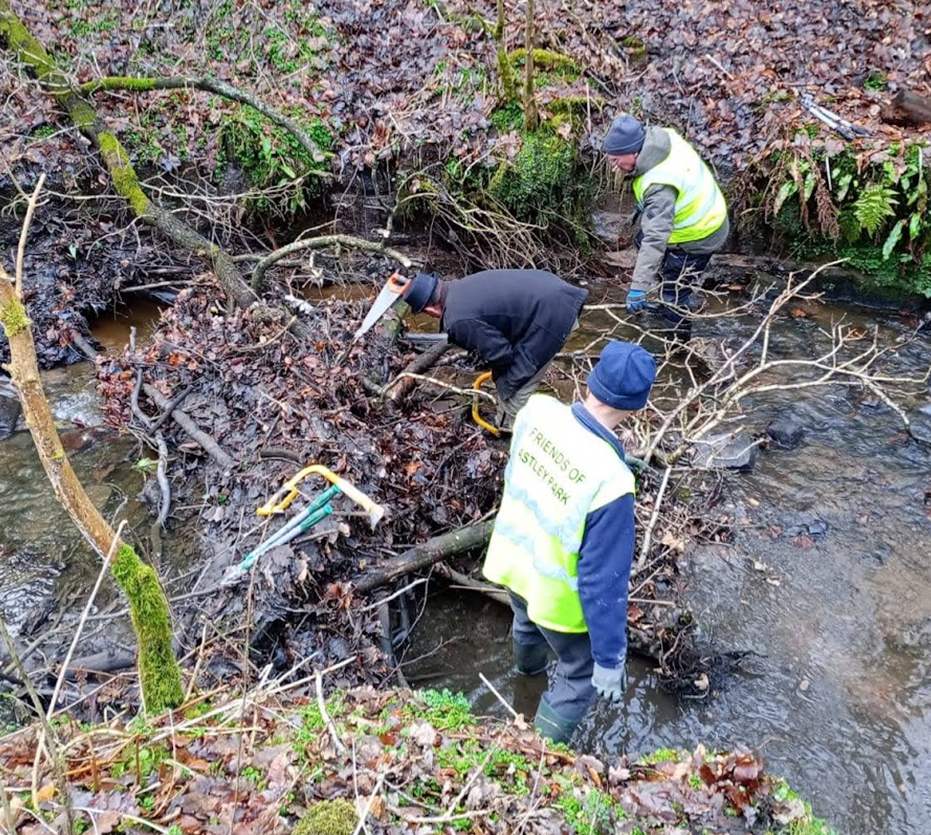
Using branches previously cut up (see January 2024 post ‘Tackling a Fallen Tree’) a natural barrier using hedge laying type techniques has recently been built by Friends’ volunteers alongside the River Chor near the wildflower meadow.
The barrier, about 1 metre high by approximately 15 metres long, will restrict access to the river which has steep sides at this point. The work has also left clear views of daffodil clusters that will soon be in flower and the barrier will hopefully be a refuge for wildlife.
Pictured below is the Snowdrop Trail in full bloom as seen from the ha-ha wall in front of the Hall. The short posts that are visible were put in by Friends’ volunteers in 2023 to mark the position of the bulbs in the ground throughout the year so that the area can be cleared of fallen leaves and bramble growth in the autumn.
However, it is not just on the Trail that snowdrops are in bloom – see the latest pictures in the Gallery
The first snowdrops of the year along the Trail are now coming into bloom. For full details go to The Snowdrop Trailarticle which now has a map to accompany it.
Also, to view a snowy picture of Astley Hall go to The Gallery






 Friends of Astley Park