
During 2024 Friends volunteers took photographs and recorded details (species found and their location) of plants, animals and fungi they had seen as part of a co-ordinated Wildlife Survey of Astley Park. This information was compiled into a series of reports that were published on our website; they can be seen here Taken together the reports give an insight, but by no means the whole picture, of what comprises the biodiversity (species variability) of the Park. A companion article can also be viewed – Wildflowers of Astley Park click here
As with most natural and semi-natural places the biodiversity of the Park varies depending on the different habitats present, together with how these are managed and used. Broadly the Park is made up of three main habitat types – woodland, grassland and aquatic. The significance of understanding the wildlife variability of the Park is that this will better inform us – the Friends of Astley Park – as to how we should most appropriately carry out our practical volunteering tasks.

The main woodland habitat is Great Wood which occupies a large swathe of land on the southern side of the Park. This area of woodland has many large, mature trees of varying species, but it is dominated by Beech (genus Fagus) trees. Over much of the year these form a dense canopy of leaves meaning the ground underneath is then heavily shaded. Some early flowering spring plants can bloom successfully before the canopy develops. Thereafter later emerging plants struggle to reach the light and are limited to small, open-to-the-sky, areas. Plants that can better withstand some shading in the Park include Brambles (blackberries, wild raspberries etc (sub-genus Rosoideae) and Ferns (genus Polypodiopsida) of various types. However, another is the pest that is Himalayan Balsam (Impatiens glandulifera). Each year Friends’ volunteers engage in ‘balsam bashing’ – uprooting the near mature plants just before they produce their seeds – in an attempt to control their spread and adverse ‘crowding-out’ impact on native plants.
Elsewhere the floor of Great Wood is typically bare of vegetation, a situation compounded by human trampling of areas off the main paths. Friends’ volunteers have in the past sought to restore the ground flora of the Park’s woodlands through the Woodland Wildflower Project but with limited success.
Action: To pursue a further, better prepared attempt to re-introduce native woodland wildflowers. This will be next carried out in 2025.
Inevitably over time, old, over-mature trees fall to the ground or are purposely felled because they are unsafe. Unless they block a path or river, the fallen tree trunks and main branches are usually left lying on the ground to rot away. These can provide a good habitat for many small animals, plants and fungi. The Wildlife Survey reports recorded a wide variety of fungi present in the Park, typically growing on dead and rotting timber. This effect of providing a habitat can be enhanced if smaller tree trunks and cut branches are collected and built into log piles and ‘dry’ (or ‘dead’) hedges. Below is pictured the Turkey-Tail (Trametes versicolor) fungus on a bench near to the Lost Fountain.

Action: To assemble fallen tree trunks and main branches into log piles wherever it is manageable without the use of heavy machinery. Also, to use smaller cut branches for building into dry hedges. These provide both a habitat and act as barriers to help deter human trampling of wildflowers and restrict access to less safe areas of the Park.
Mature woodland trees are good sites to install bird nesting and bat roosting boxes – to find out how the latter have been installed in the Park – click here . Friends’ volunteers organise at least two bat walks/talks each year that are provided for the public to learn about and hopefully spot bats in the Park. Experts in the topic explain how bats live and how to detect them on the summer evenings when the events are held. Through these talks/walks it is known that the Park is home to at least seven species of bat. The most commonly found types of bats at these events are the Pipistrelle (Pipistrellus pipistrellus) and Daubenton’s (Myotis daubentonni) species.
In terms of woodland mammals, Grey Squirrels (Sciurus cardinensis) are commonly seen, sadly they have long replaced Red Squirrels (Sciurus vulgaris) in the Park.

Occasionally seen are Foxes (Vulpse vulpes) and Deer – typically Roe Deer (Capreolus capreolus ). There are probably several different species of other smaller mammals, but these were not recorded in the wildlife reports. A Hedgehog (Erinaceus europaeus) ‘hibernation home’ has been installed next to the Sensory Garden close to Great Wood – see here
The Wildlife Survey did not comprehensively catalogue all the bird species present in the Park. However, we know from ad hoc sightings that a range of birds do have their home here. The hammering sound of woodpeckers creating nesting holes is commonly heard each Spring – indicative of Greater Spotted Woodpeckers (Dendrocopos major). Other woodland residing birds spotted have been Jays (Garrulus glandarius), Tree Creepers (Certhia familiaris) and Nuthatches (Sitta europaea). Grey Wagtails (Motacilla cinerea) are often seen swooping over the surface of the River Chor in Great Wood where Kingfishers (Alcedo atthis) and solitary Dippers (Cinclus cinclus) are also occasionally seen. Bird nesting boxes, positioned high up on trees, have been present in the Park for many years but these have fallen into such disrepair that they have become in need of replacement.
Action: To enable the making of new bird nesting boxes and their installation, especially in Great Wood.
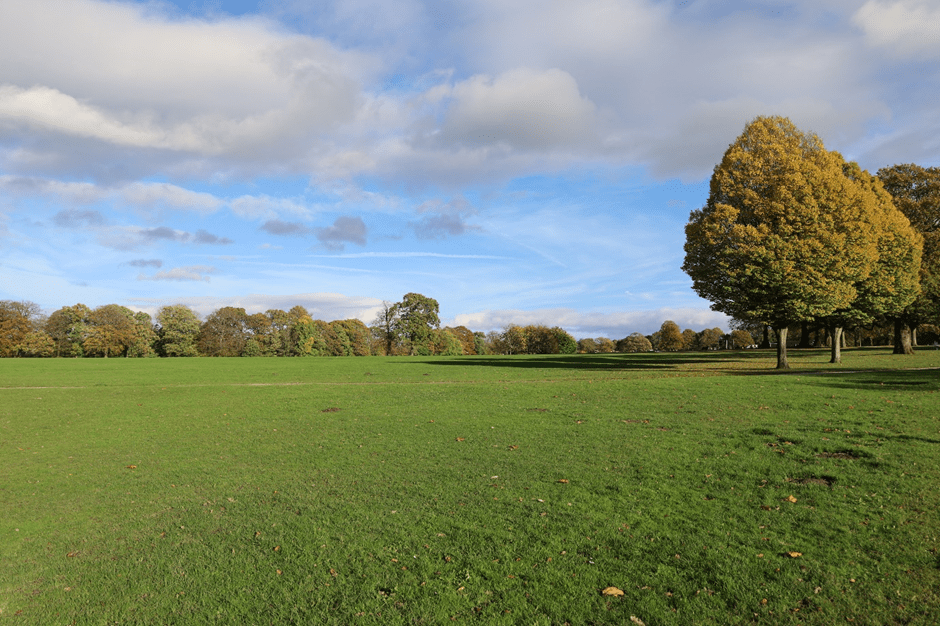
Much of Astley Park is managed as grassland which for many years has been regularly mown throughout the growing season. Flocks of Crows (Corvus corone) are commonly seen on the open grassland areas of the Park. There is also evidence of Moles (Talpa europaea) shown up by their soil deposits which exist in numerous places. Occasionally between grass cuts there are glimpses across wide areas of the Park of common wildflowers such as the Dandelion (Taraxacum officinale), Daisy (Bellis perennis), Buttercup (genus Ranunculaceae) and Clover (genus Fabaceae). During 2024 the Wildlife Survey recorded a much rarer flowering plant – Lady’s Smock or Cuckoo Flower (Cardamine pratensi) pictured below – which was found in an area that was left unmown for a couple of months. It is likely that many other wildflowers would show themselves if grassland areas were less frequently mown.
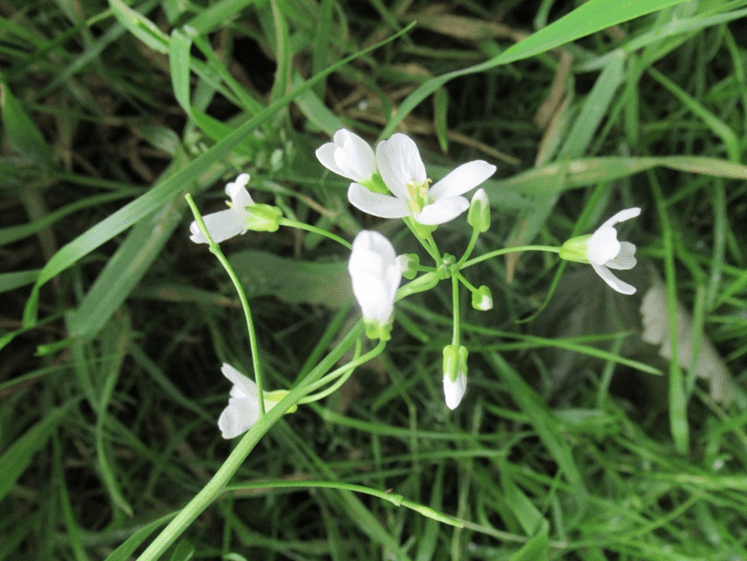
Action: To encourage the Council to delay/reduce/leave the mowing of some grassland areas of the Park.
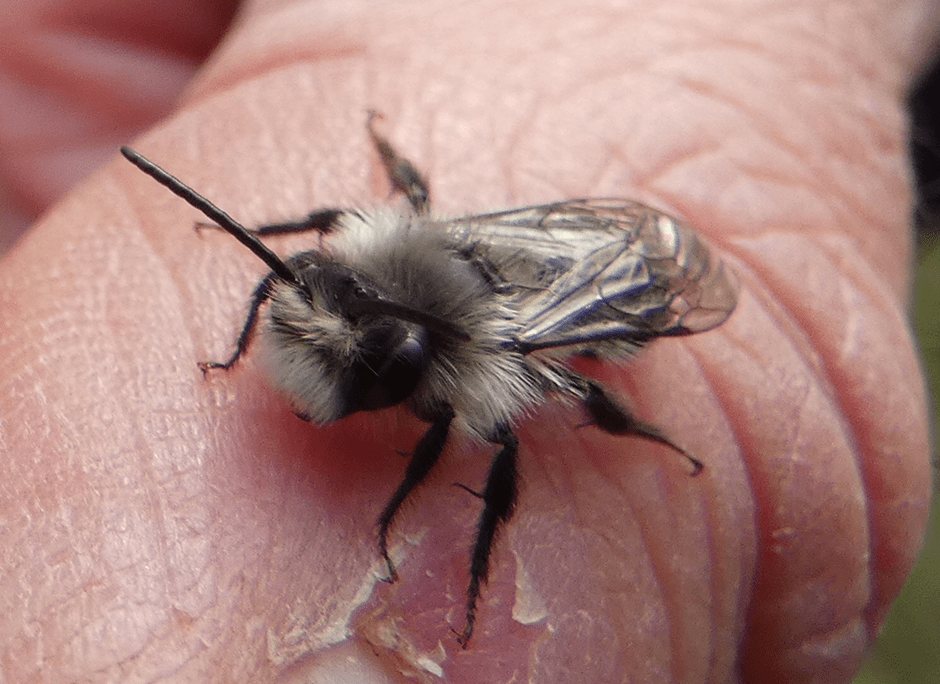
The lawn fronting Astley Hall is appropriately close cut for ornamental effect. However, even so in the vicinity of the Green Man sculpture the mown area is home to Ashy Mining Bees (Andrena cineraria) pictured below, which nest in burrows in the ground. The bees appear to thrive here despite the area being frequently walked over by people.
At the other end of the Park a small patch of land, off the north side of the main path from Park Road opposite to the sensory garden, is managed by the Council as a wildflower meadow. This was instigated as a Friends’ project in 2011 – see here Although superficially this area may seem a bit scruffy, on closer inspection these introduced wildflowers can make quite a show.

The third main habitat of Astley Park is aquatic. Mainly this is accounted for by the Lake next to Astley Hall and the River Chor which enters the Park near Rectory Close in the north east and leaves at Southport Road in the south west. There are other small tributaries of the Chor and a pond in Great Wood which is colloquially known as the ‘Green Pond’ due to its permanent covering of Duckweed (Lemnoideae).
The Hall Lake supports an impressive expanse of Water Lily (genus Nymphaeceae) over the summer season. Another common flowering plant on water margins is the Marsh Marigold (Caltha nalustris). Although not detected through the Wildlife Survey there are probably small fish present in the Chor and Lake. Regular sightings of solitary Herons (Ardea cinerea) confirm this.
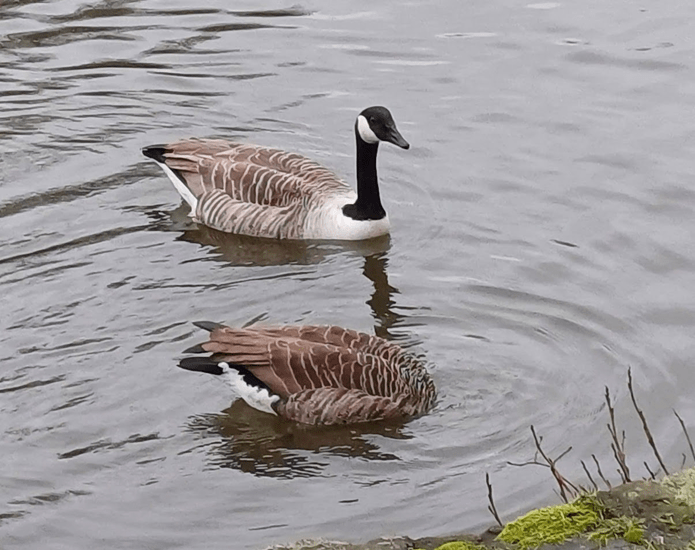
A range of wildfowl reside at the lake including Mallard (Anas platyrhynchos), Moorhen (Gallinula chloropus), Coot (Fulica atra) and Canada Geese (Branta canadensis) – picture above. A variety of Gulls (genus Laridae) also visit the Lake. In the recent past a few Mute Swans (Cygnus olor) have made their home on the Lake.
All the aquatic habitats at the Park are likely to support a range of small invertebrates. Their variety and abundance are indicators of how ‘clean’ (unpolluted) the water is. A specific range of eight species (‘Mayflies’ (Ephemeridae) and associated species sampled during the nymph stage of their life cycle) have been selected for water quality monitoring purposes through the nation-wide Riverfly initiative. Friends’ volunteers have been trained to carry out net sampling for these invertebrates in the River Chor and the early indications are that the water quality there is generally quite good. But that could easily change following a pollution incident, which is why regular monitoring is necessary. Click here for more information on this.
In conclusion although Astley Park is primarily a managed municipal ‘Green Space’ it has a variety of natural and semi-natural habitats that support a fairly wide range of wildlife. However, this degree of biodiversity could be improved through managing the Park in more ecologically friendly ways. This short article has recommended a few measures that could be taken in that regard.
 Friends of Astley Park