Once again, the Chorley Flower Show is coming to Astley Park. This year it is on 26th, 27th and 28th of July. In addition to our stall (last year’s pictured below), the Friends are also entering the Community Garden competition.
Designed by our member Jan Sanderson, the Friends’ Community Garden entry is up against a record number of others this year – 17. The gardens are judged against criteria associated with how well they convey their project’s brief. More details of the Friends’ entry and photographs of it will be posted on this website when the garden has been built.
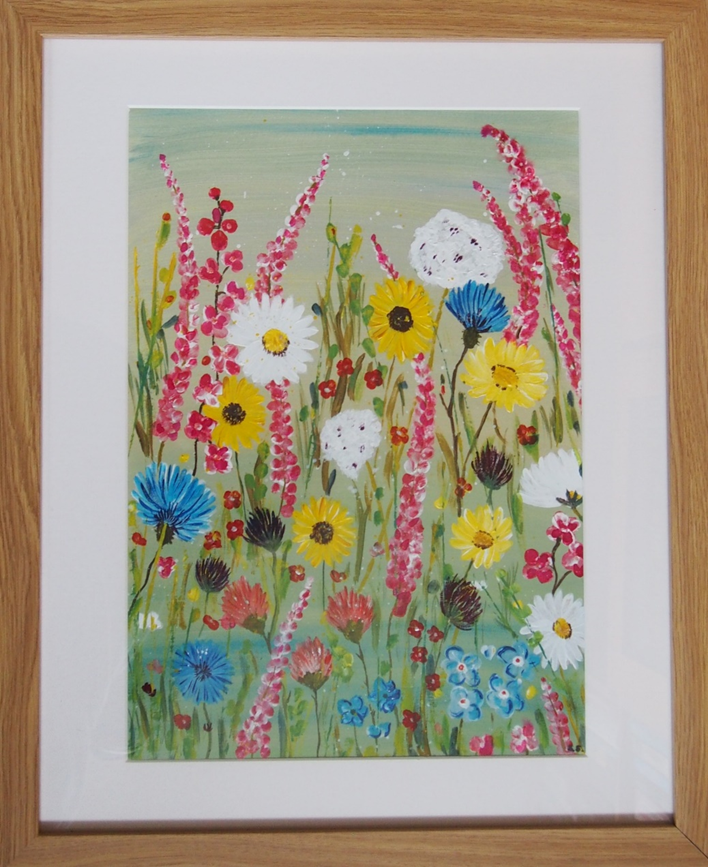
In the meantime, see below an image of the delightful painting our member Sandra Sugden has produced and donated to be raffled this year.
Please come to our bright and colourful stall to get a ticket for the draw. Here you will also find fun activities for children, plants available for a donation and, featuring for the first time this year – our unique plant pot stands, carefully made by our member Steve Hodgson. You can also discover all the Park activities we get involved in and how you can join us.
Himalayan Balsam as the name suggests originates from south east Asia. It was introduced into Britain in the 1800’s, along with many other oriental species, brought here by plant collectors working for commercial nurseries. However, unlike most other introduced plants, it is very invasive to the extent that it impoverishes habitats by its shading effect so killing off other plants. By law it is an offence to plant or cause Himalayan Balsam (Impatiens glandulifera) to grow in the wild.
We Need Your Help
Balsam plants, which grow up to 3 metres tall, can each produce 100’s of seeds, that are easily spread. The most effective way to control Balsam is to pull up the near-mature plants. Fortunately, they are shallow rooted so with care and practice can be pulled out of the ground intact. Then to kill the plant the stem should be snapped. The time of year to do this ‘Balsam Bashing’ is normally in July and early August – just after the birds’ nesting season and before the seeds appear. Unfortunately, this is not a one off task. The seeds can lie dormant in the ground for several years before they germinate. So, it is necessary to go back to areas previously cleared years before and repeat the job.
This year several groups are helping us – the Probation Service Community Payback team, volunteers from Lancashire Wildlife Trust and the Bibby Group, along with pupils from St Laurence’s C of E Primary School. But that still won’t be enough to remove all the Balsam from Astley Park. Friends’ volunteers are doing an extra Saturday morning session on 6th July along with a scheduled one on 13th. If you want to help us please come along to the Coach House courtyard for 9.30am in long sleeves and trousers with sturdy footwear and gloves.
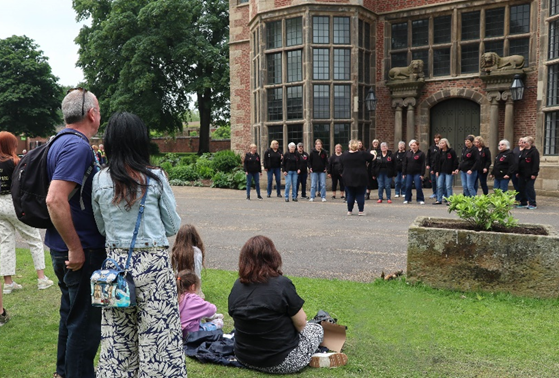
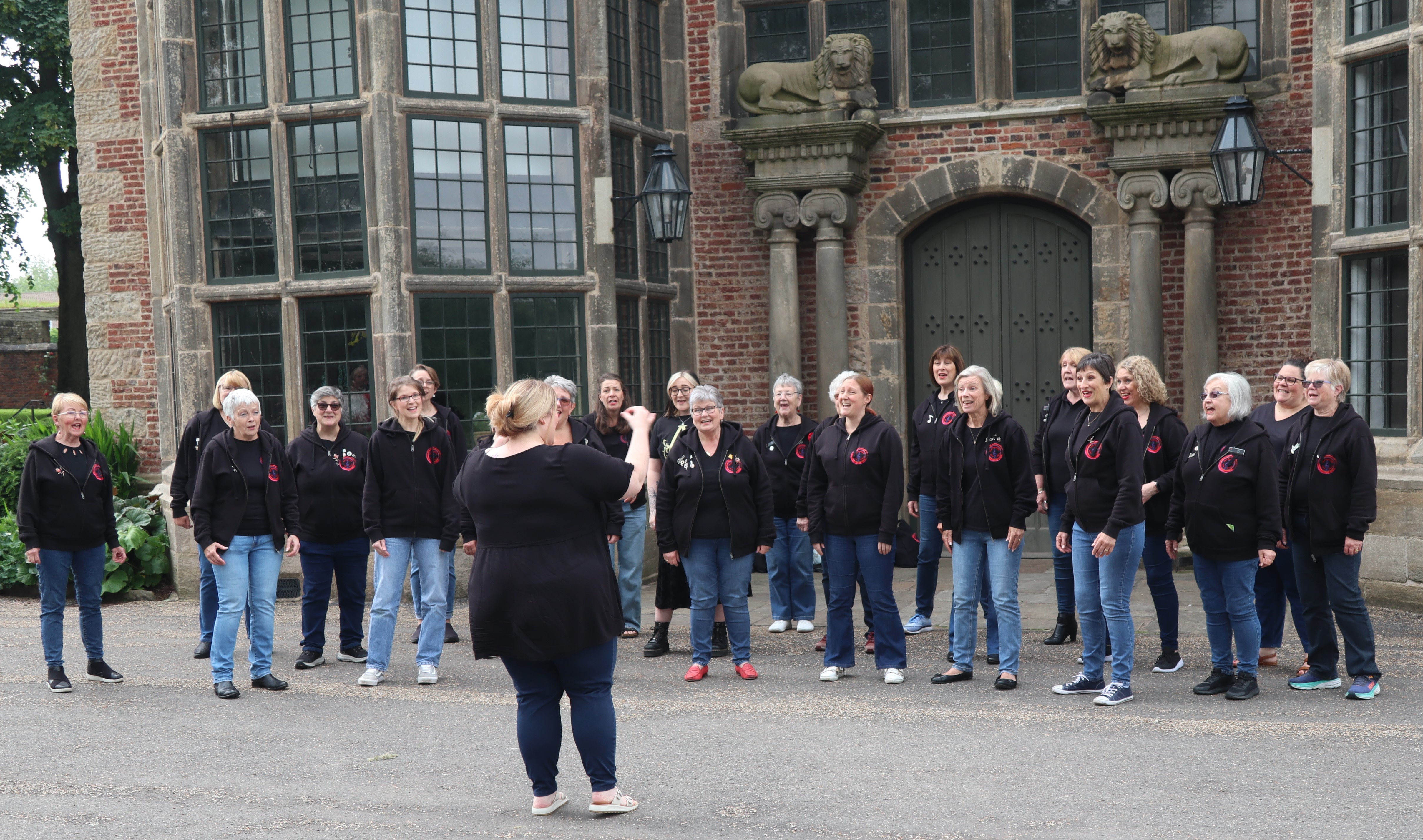
Friday 31st May 2024 was the 100 year anniversary of Astley Hall and Park being formally handed over by Reginald Aurthur Tatton to the people of Chorley. On that date in 1924 the Hall officially opened as a museum and a newly created cenotaph off Park Road was unveiled as a memorial to Chorley’s fallen of the First World War. Exactly one hundred years later the voluntary groups most associated with Astley – the Friends of the Hall, the Walled Gardeners, the Family History and Heraldry Society, and the Friends of Astley Park were invited to a low key get together at the Hall by Chorley Council. The Red Rosettes Show Chorus sang Happy Birthday and the voluntary groups were thanked for their contributions over many years.
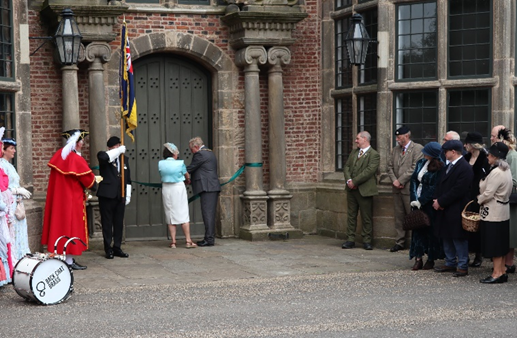
On Sunday 2nd June 2024 there was a re-enactment of the 1924 opening ceremony started-off by a speech from Chorley’s Mayor Councillor Gordon France and followed by a parade made up of many local groups to the Hall. Here a ribbon was cut by the Mayor and Mayoress Councillor Margaret France – and the main door to the building opened. This event was anything but a low key affair. The parade was headed by a jazz band, and within the throng of people there was a stilt walker, jugglers and many participants dressed in period costumes.
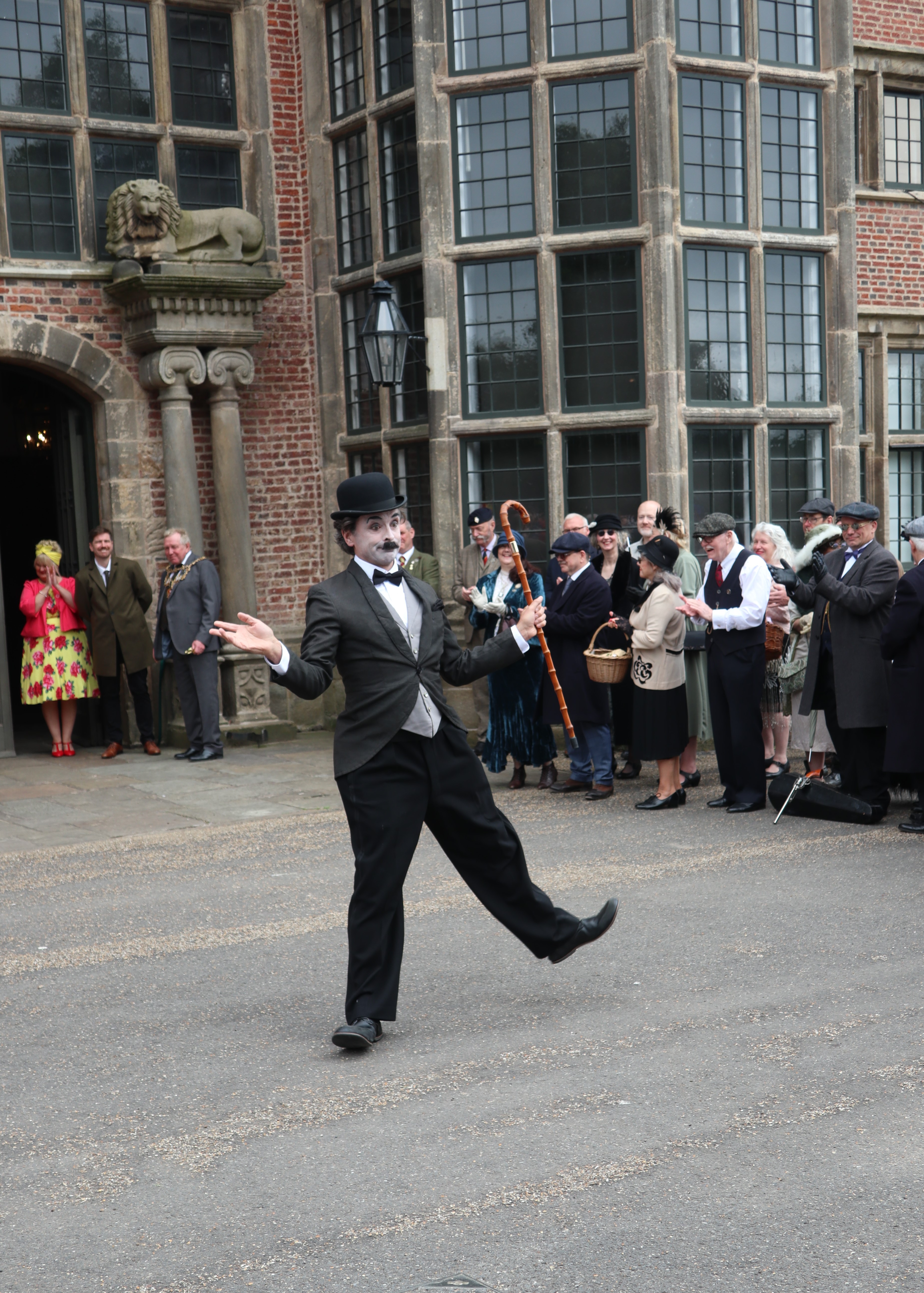
After the ribbon cutting, the gathering, swelled by many people also there for Picnic in the Park, was entertained by the jazz band who did a lively rendition of numerous tunes that were animated by a Charlie Chapin look-a-like performer.
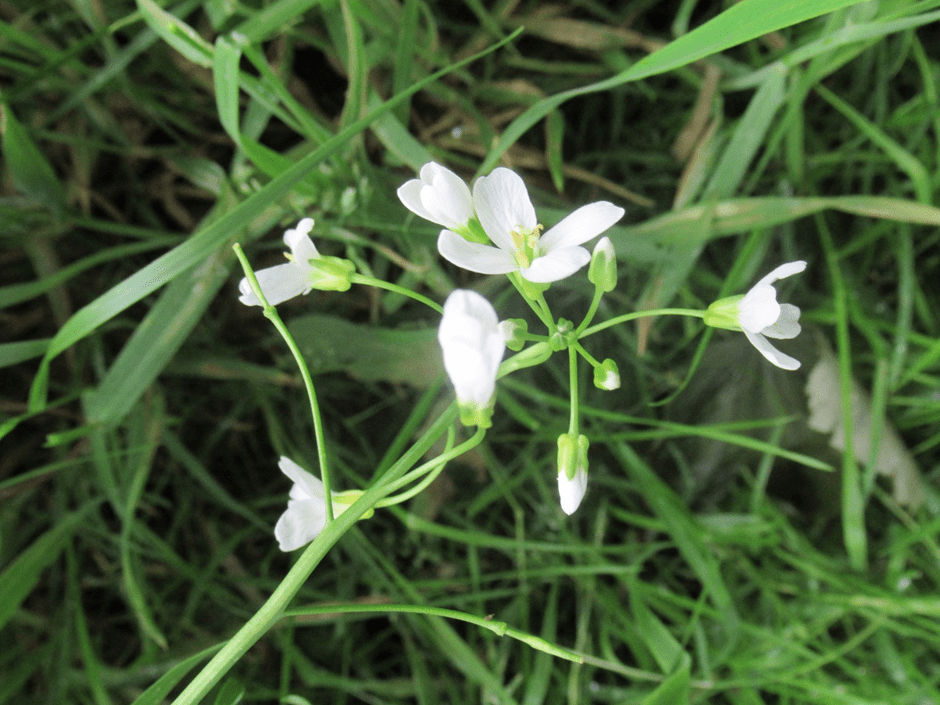
Lady’s Smock or Cuckoo Flower – Cardamine pratensis, a member of the Cabbage family. This specimen was spotted on the main field in an area that had not been mown, showing the benefits of leaving some grass unmown. Cuckoo Flower, also commonly known as ‘Lady’s Smock’, is a pretty, springtime perennial of damp, grassy places like wet meadows, as well as roadside verges. Its pale pink flowers bloom from April to June and are thought to coincide with the arrival of the first Cuckoo – a sure sign that spring has arrived at last. Cuckoo Flower has a rosette of leaves at its base and an upright stem that bears the delicate, small, pale pink or mauve flowers. Each flower has four petals, although double-flowered varieties do appear.
Herb Robert, Geranium robertianum, a member of the Crane’s bill family. This was spotted along the main path heading towards Ackhurst Lodge.Herb Robert is found in a variety of habitats, including woodland and hedgerows but also rocky or exposed areas, scree slopes and coastal areas. Look for it in areas of shade away from acidic soils. Its small, pink flowers mainly appear between May and September, and its leaves emit an unpleasant, mousy scent.
Bramble (blackberry) Rubus fruticosus This is found in many areas of the park. It is hardy and determined! It is often considered a nuisance because it has long and thorny stems and can grow up to 2 metres in height. However, its flowers are a food source for honey bees and bumblebees (may be seen in this photo) and other wild animals. Leaves are eaten by certain caterpillars as well as deer. Its ripe berries are eaten by birds and by foxes and badgers. Bramble is also a habitat for some animals.
Tinder Fungus, Fomes fomentarius. This bracket fungus was spotted on a dead beech tree in Damhead Wood behind Elmwood. Although usually found on dying beech, it may also be found on birch trees in the north of its zone – eg in Scotland.
Many thanks to our member David Francis who has not only taken the pictures but provided the authoritative text for this article.
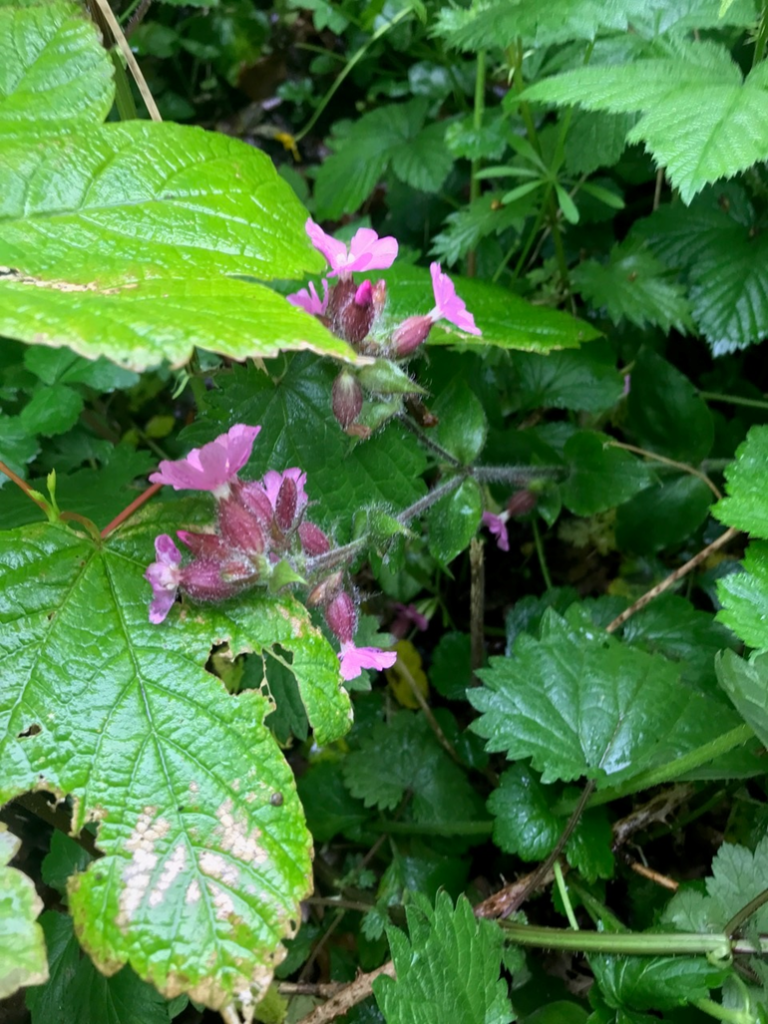
Red Campion Silene dioica, seen on the banking below Park Road. These woodland guardians have strong links to myths and mysticism. They are favourites of plenty of woodland insects and bloom a cheerful pink soon after the bluebell has finished flowering. The flowers are important for various pollinating insects, including bees, butterflies and hoverflies. Look for Red Campions in lightly shaded areas in woodland, along hedgerows, in fields and ditches and on roadside verges. This species is another ancient woodland indicator, so may give a clue to the age of our wood.
Horsetail Equisetum, seen on damp area above the reed bed and below the path that runs below Rectory Close, off Park Road. Equisetum is a “living fossil”, the only living genus of its family which, for over 100 million years dominated the understory of the late Palaeozoic forests. Wet woodland nowadays is one of our least common woodland habitats.
Garlic Mustard Alliaria petiolata, found at the edge of Dam Head Wood showing through the railings at the side of the path behind Elmwood. The plant is abundant in damp shaded areas, common in hedgerows and at the edge of woods. It is a food plant of the green-veined white butterfly (Pieris napi) and a site for egg laying. Garlic Mustard seed is important in the diet of many farmland birds. The flowers open from April to June and peak flowering occurs in mid-May. Midges and bees pollinate the flowers, however, the flowers are self-compatible and may self-pollinate automatically.
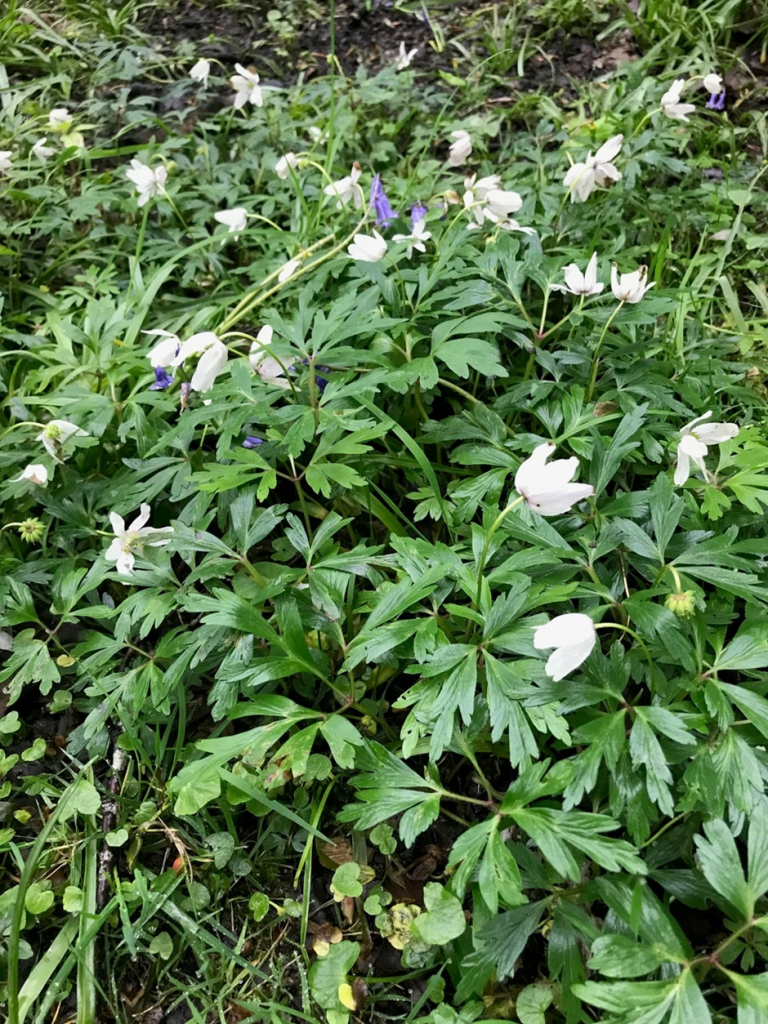
Wood Anemone (Anemonoides nemorosa)seen by the main drive as it drops to the bridge beside the Lost Fountain and is often found in shady woods. The species is common in the British Isles but it spreads very slowly, by as little as six feet per century, so it is often used as an indicator for ancient woodland.
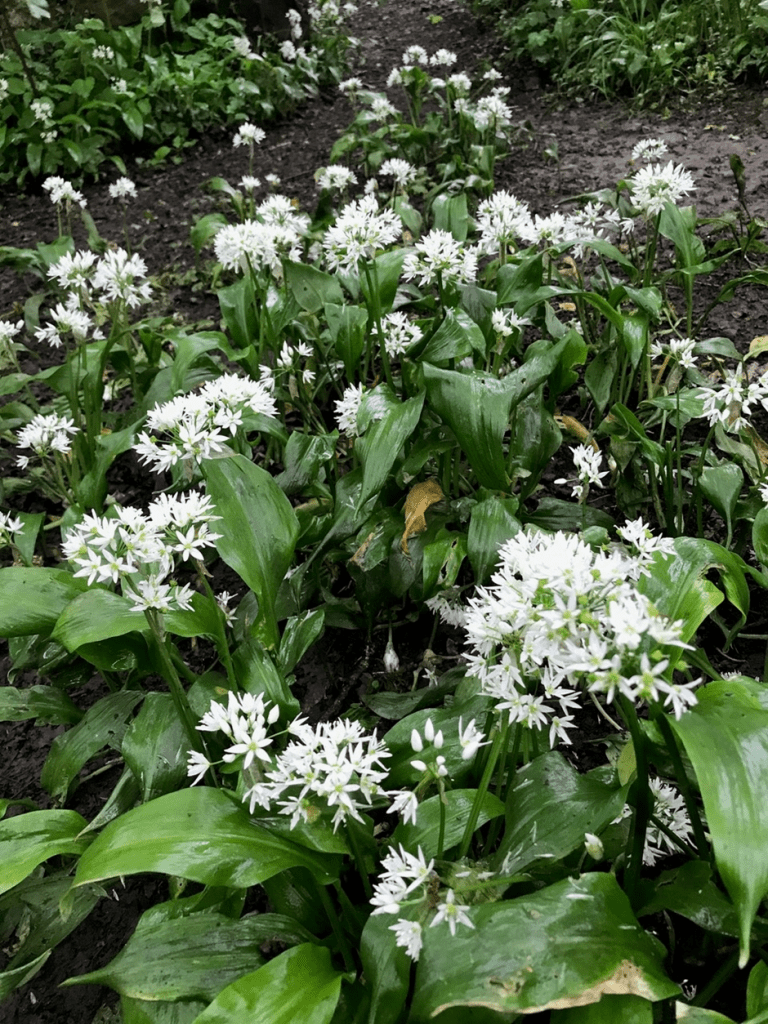
Wild Garlic Allium ursinum. This was also seen by the main drive dropping down the hill to the bridge by the Lost Fountain. Wild garlic is common and widespread across the UK. It favours deciduous woodland. You can also spot it in scrub and hedgerows, but it prefers damp areas. Wild garlic is another ancient-woodland-indicator plant. If you spot it while you’re out exploring, it could be a sign you’re standing in a rare and special habitat.
This is a Rowan or Mountain Ash Sorbus aucuparia. Along the right of the drive heading to Ackhurst Lodge is this tree that has been blown over but continues to grow and flower. Bane of witches, diviner of the future and producer of jam, rowan is an elegant tree with a mystical history. Its leaves and berries are a favourite for wildlife in woods and towns alike. All being well this one will produce its red berries in the autumn, the seeds of which will be dispersed by birds.
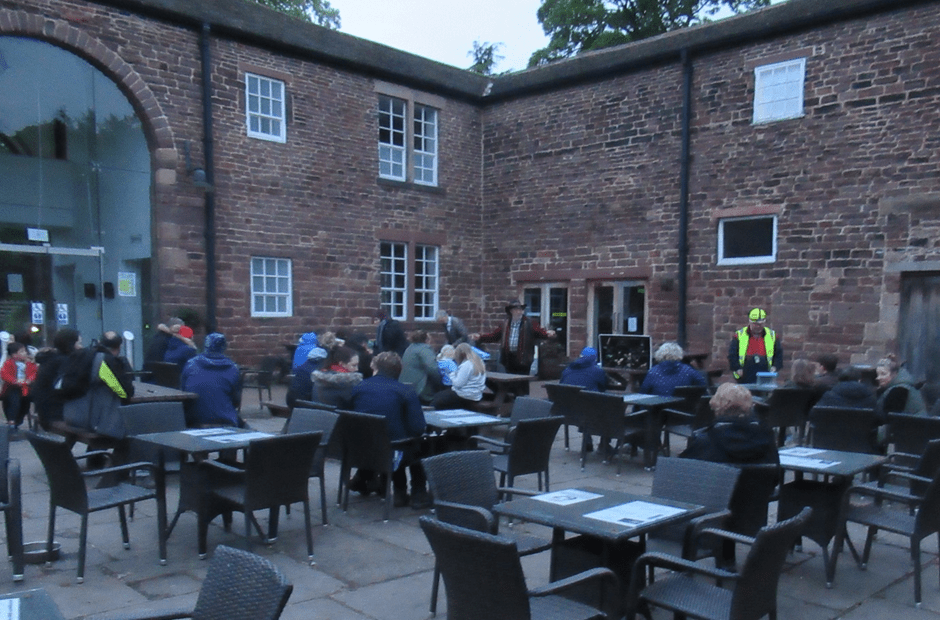
About 25 people recently enjoyed the first Bat Talk and Walk of the year in the Park hosted by Friends’ volunteers and led by Harold and Michael from the Merseyside and Lancashire Bat Group. Meeting in the Court Yard as dusk approached, the participants learned about the fascinating lives of bats and had their questions answered. Then, equipped with audible bat detector devices, had a stroll around the Park, first down to the Lost Fountain and the Green Pond before returning to the lakeside. On the dam wall path the best results were achieved with four different species detected – three types of Pipistrelle and Daubenton’s – each distinguished by the calls they make at different frequencies. Many thanks to Harold and Michael.
Friends’ volunteers are sending in more and more photographs to be recorded for the 2024 Wildlife Survey of the Park. Just some of those photographs are featured in this third website article on the topic.
Now in late April bluebells are making a great show across many areas including in some parts of Great Wood, as below.
However, a major threat to the floral diversity of the Park is also starting to make its presence known – Himalayan Balsam… As its name suggests this is not a plant originating in Britain. It was first introduced into this country by John Forbes Royle in 1839, then professor of medicine at King’s College London, and within 10 years had escaped the confines of cultivated gardens to quickly become widespread. This invasive species can grow to over 2 metres tall and has attractive pink flowers. It also has some medicinal and culinary uses. However, because of its adverse impact in crowding out native plants Friends of Astley Park along with many other groups and environmental bodies across the country try hard to at least stop its spread by uprooting the then near-mature plants in high summer. Look out for news of our ‘Balsam Bashing’ work on this website later this year.
The photograph below shows the problem – Balsam plants growing-up through Bluebells, soon to dwarf them on the bank of the River Chor near the Lost Fountain.
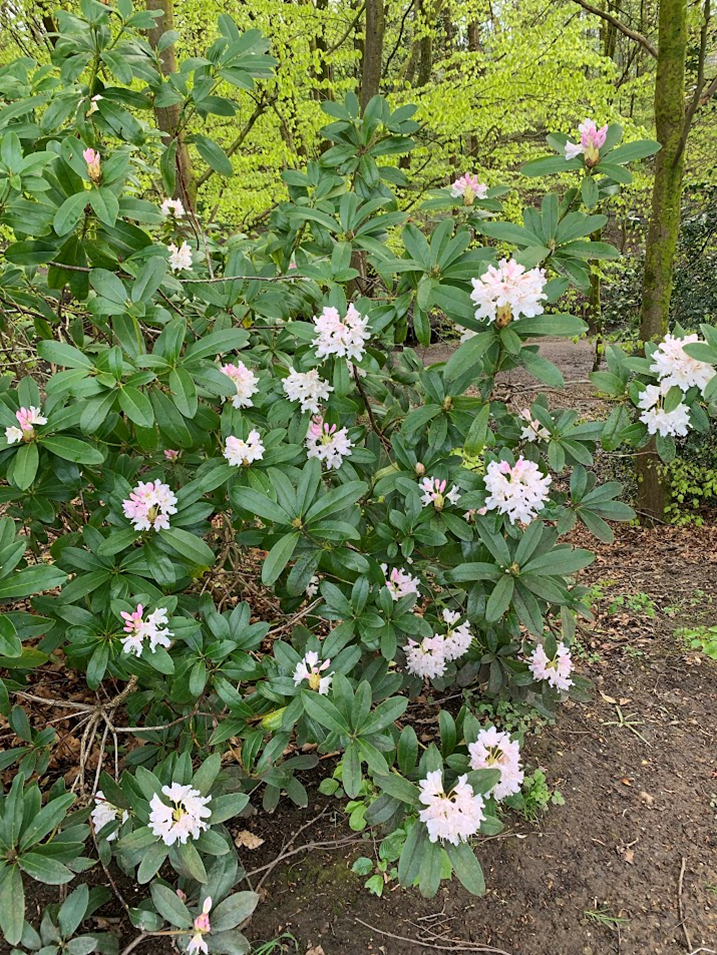
Another ‘alien’ species, that was again introduced into British gardens for their spectacular flowers, is the Rhododendron. These were once more widespread in Astley Park but because of their dominant tendency were largely cleared. Below is a surviving specimen on the edge of Great Wood.
Also often seen in gardens but a wild native plant is the Solomon’s Seal. The picture below was taken in the banking down from Park Road overlooking the Reed Bed.
The photograph below of Wood Sorrel was taken near the Green Pond.
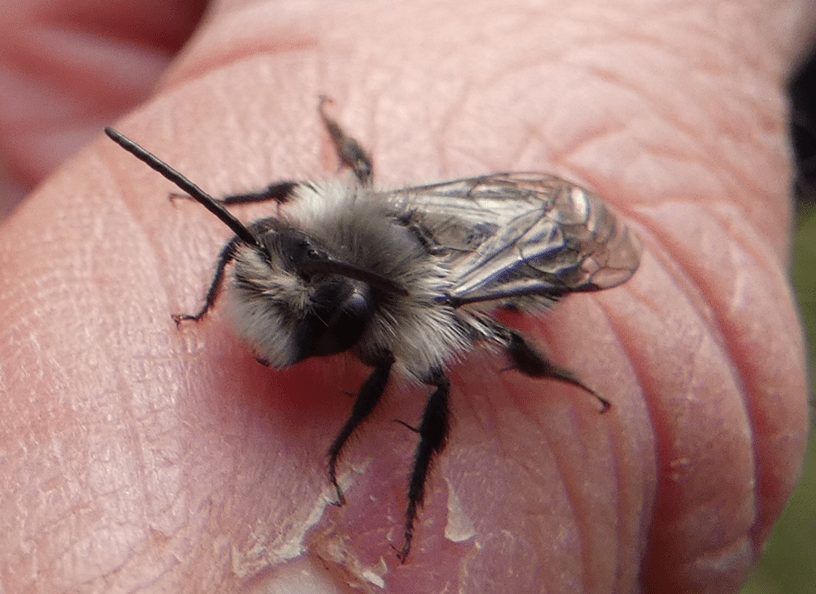
Another interesting find is a colony of Ashy Mining Bees. Although these are common across the UK and Europe they are a little unusual in that they nest in the ground. The one below is pictured on someone’s hand – generally docile they are considered to be safe around children and pets. However, the home of this colony may not be that safe as it is very close to stump of the recently cut down (because diseased) Fern-Leaved Beech tree near the Court Yard and on a well trampled route.
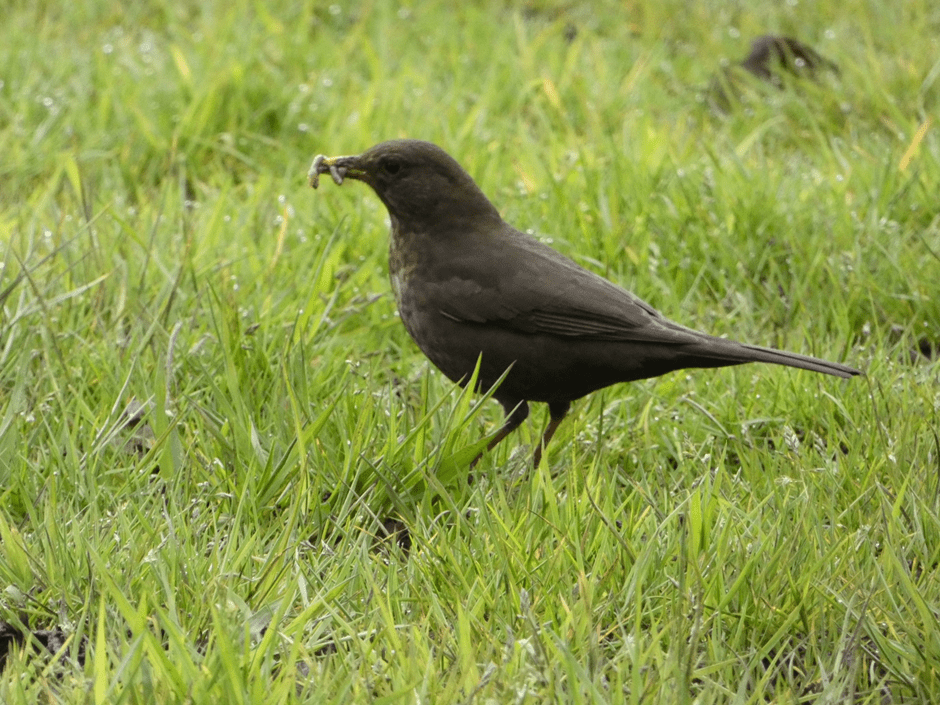
Finally, we have a picture of a bird. It is female Blackbird with an earthworm.
The pictures in this article have also been saved in the Gallery
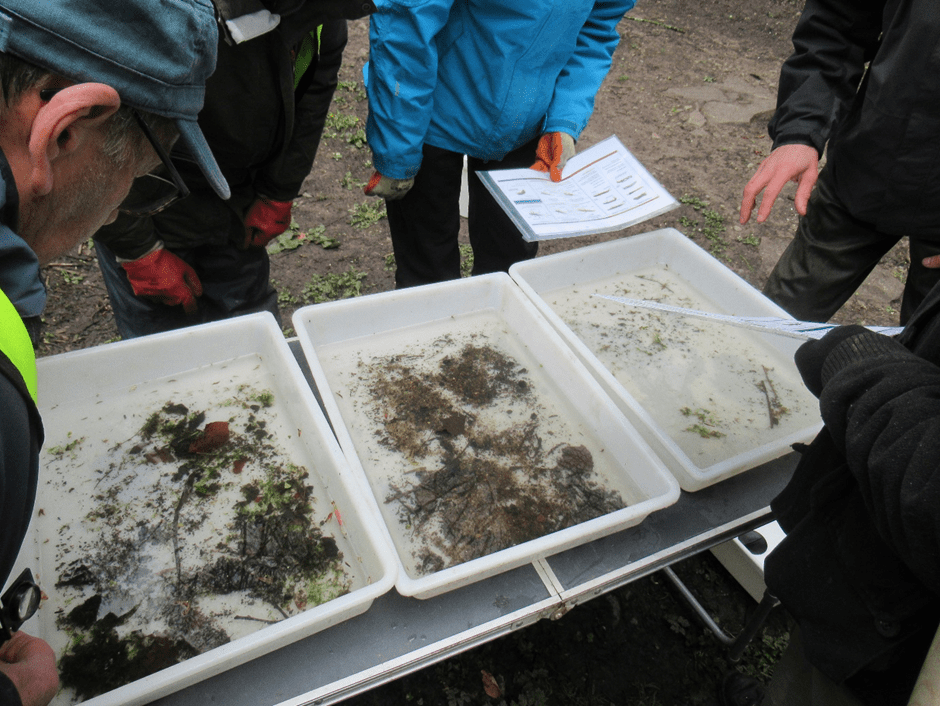
Following our first river invertebrate sampling training session late last year (see November ’23 post) Friends’ volunteers again took to the water recently to hone our skills ahead of us becoming accredited citizen researchers. This time we were in a stretch of the River Chor near the Lost Fountain. This is a location with a major surface water outfall, a small weir and a range of riverbed conditions making it more susceptible to variations in Riverfly populations. However, by lifting out small river rocks for washing off into the sampling trays we found a wider cross-section of bugs than by just kicking sediment in front of a net. Next time it is off to the classroom for more detailed instruction and assessment! Many thanks to Sam and Samuel from Groundwork for their excellent tutoring to date.
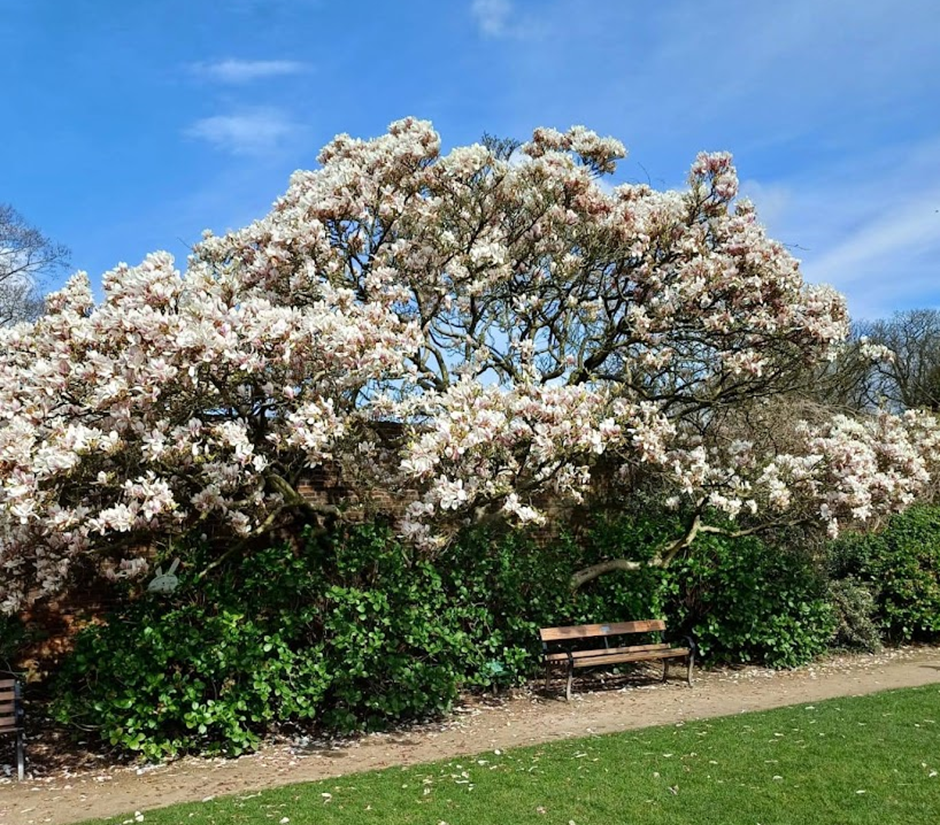
In early spring Magnolia trees make a magnificent sight with their flowers emerging before their leaves. Pictured below is the fine specimen in the Walled Garden.
Photographed below on the edge of the Park near Astley Village but commonly seen throughout the woodlands is a Grey Squirrel. This species, although much maligned for out-competing Red Squirrel (of which none exist in the Park), nevertheless makes for an attractive sight.
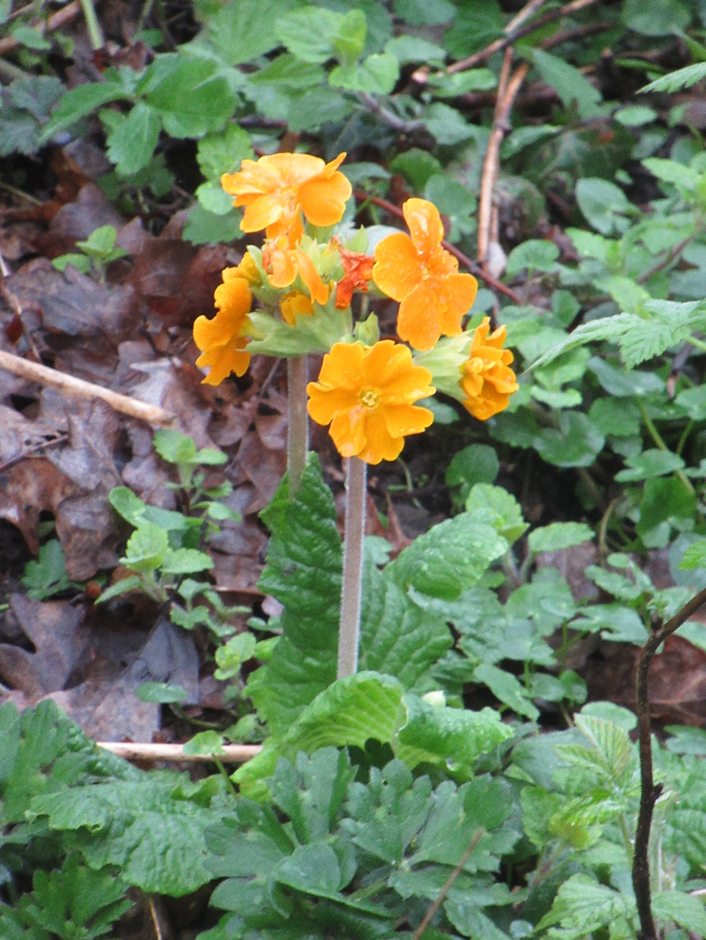
Now April has arrived more flowering plants are making their presence visible in the Park. The Primula family includes various species ranging from the wild primrose to numerous horticultural cultivars. The naturally occurring Primrose has a yellow flower, the specimen pictured below stood alone in the woodland near Ackhurst Lodge but there are also individual white flowering plants elsewhere in the Park which may be garden escapees.
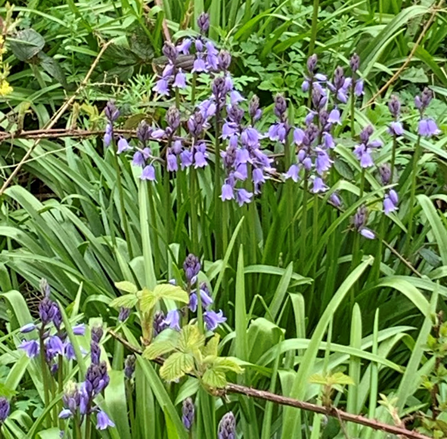
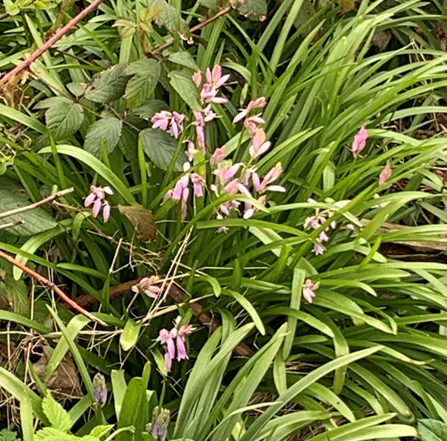
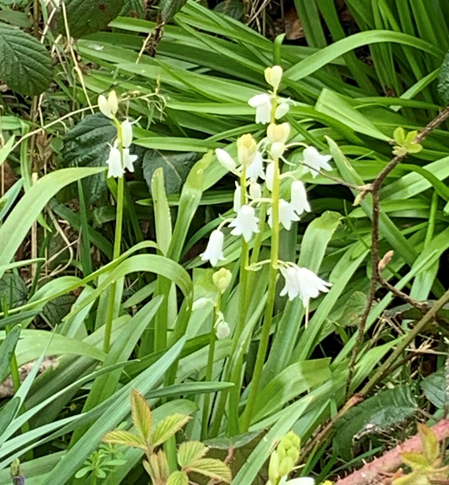
Alongside the stretch of the Astley Trail behind the houses fronting Millfield Road Bluebells are starting to come in to flower. However here they are not alone as alongside them are ‘Pinkbells’ and ‘Whitebells’ as pictured below. The latter two are cultivars from a nearby garden.
Not to be confused with ‘Whitebells’ are Snowbells – pictured below. Only a few of these are known to exist in the Park, these were found near the pedestrian entrance next to Rectory Close. The flowers have distinctive triangular stems.
Often thought of as a weed, as they easily spread in the wild and in gardens, is the diminutive Forget-Me-Not. Those shown below were near the steps on the Astley Trail path at the rear of Rectory Close.
Marsh Marigolds are dotted around the Park wherever there is a water margin or boggy ground – pictured below.
Last but not least in terms of interest is a Cordyceps fungus, one of several standing proudly at about 9 inches high on the top of the lake dam. There are many hundreds of species of these throughout the world and they are noted for their medicinal properties but take care!
All the pictures in this article can also be found in the Gallery






















 Friends of Astley Park