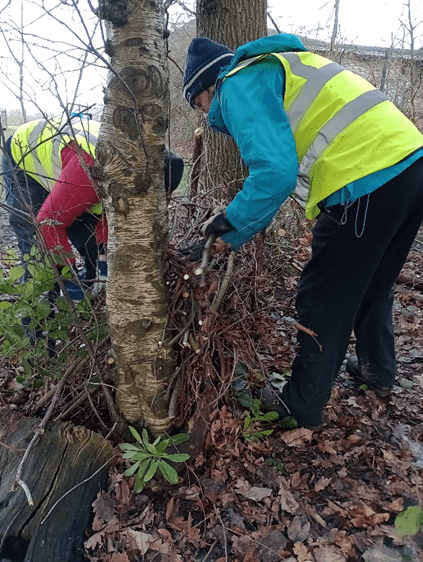
A dozen or so Friends’ members were tackling a wide variety of tasks in the Park recently. This included building a dry hedge near the former toilet block site as pictured below.
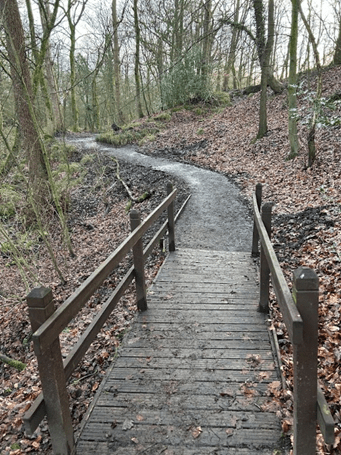
Nearby a 50-metre length of path was cleared of encroaching vegetation and a covering of mud, as shown below.
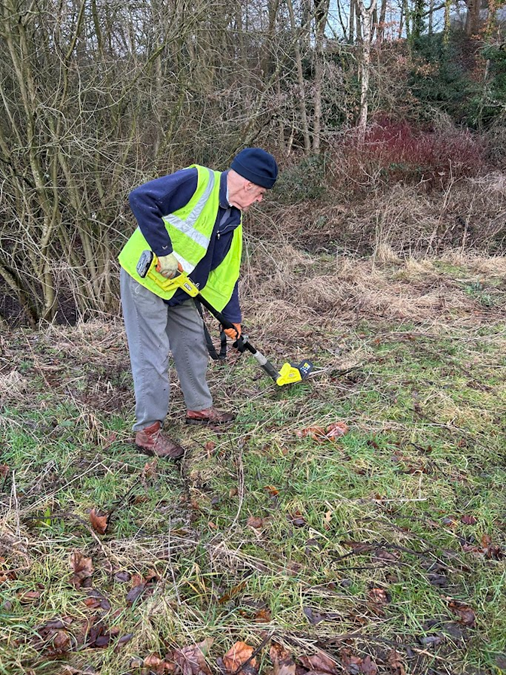
Near the wildflower meadow, on the opposite side of the main path from the Sensory Garden, brambles and other undergrowth were cut back where daffodil bulbs are coming through, see below photo.
Similar work was also done clearing fallen leaves concealing the Snowdrop Trail flowers. As well as that, substantial quantities of litter were again collected and properly disposed of.
Recently, working on two successive days, a total of ten Friends’ members joined up with Chorley Council’s three Rangers, and several volunteers from Yarrow Valley, to work on seven sites in Astley Park. As a result, a lot of progress was achieved to make using the park by visitors more enjoyable and safer.
First, pictured below is a view looking eastwards towards the town centre, showing just part of the now cleared path between the ‘Green Pond’ and ‘The Beach’ in Great Wood. Here two drains crossing under the path were unblocked and then the whole length of the path, some 50 metres long, was scraped of years’ worth of leaf mould and mud.
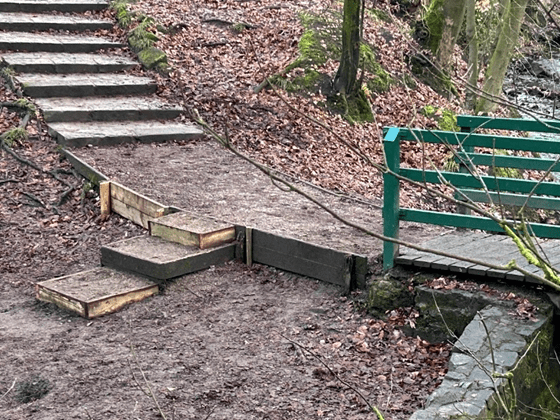
Next, at ‘The Beach’ (so called because the bank of the Chor shallowly slopes down to the river’s edge) new steps were put in place to aid access.
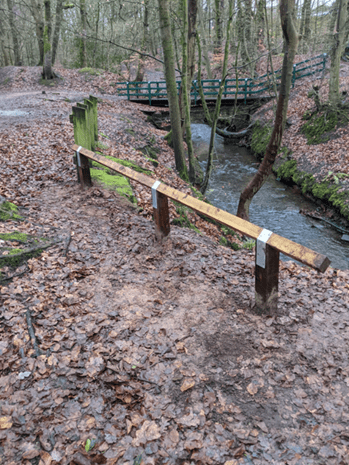
Further east along the path a new knee rail was installed close to the bridge used by Parklands School pupils. The rail provides a warning barrier of a steep drop into the river at this point.
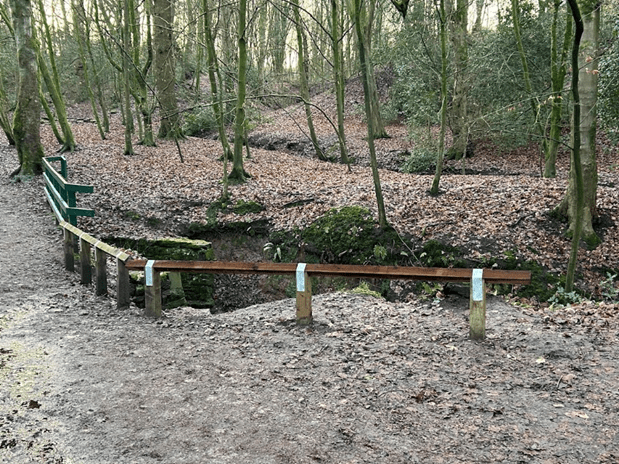
Further east still an additional knee rail has been added, to again ward off walkers getting too close to the river’s edge.
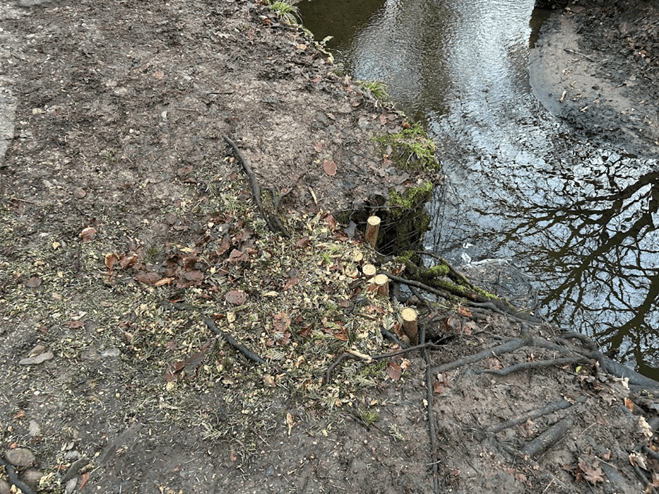
Next a hole in the riverbank, caused by a leaning tree, has been securely filled.
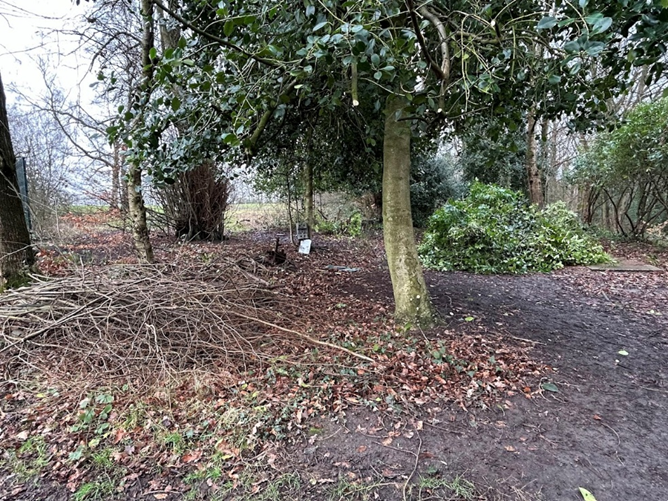
The old toilet block behind Pet’s Corner was removed by the Council last year as the disused building was being vandalised. However, the site of the building was still being misused and a source of littering due to it being concealed by overgrown shrubs and tree branches. These have now been cut back opening the site to view. The green cuttings visible in the background will be removed by Council staff; the leafless branches in the foreground will be turned into a dry hedge by Friends’ volunteers.
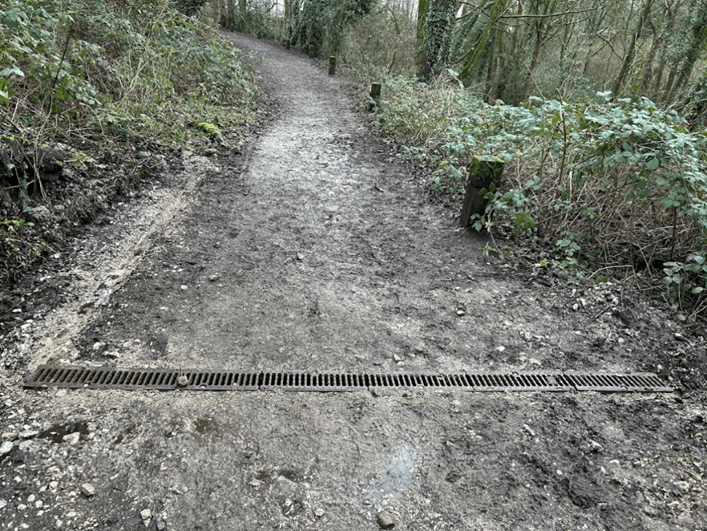
Last, but not least, a drainage channel has been installed across the path alongside Rectory Close in the northeast corner of the park. This well used route has long been rendered muddy at this spot as ground water seeps out of the adjoining banking.
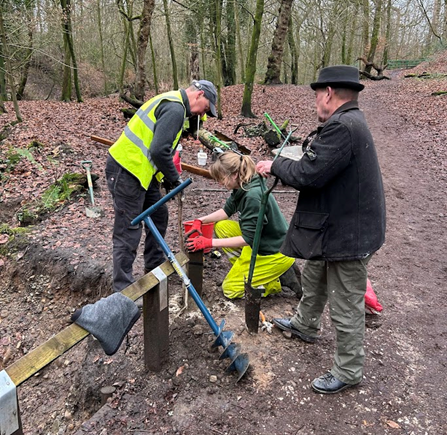
Friends’ volunteers have recently worked over two days alongside the Council’s ranger staff and had the help of volunteers from Yarrow Valley to tackle a wide range of tasks in Astley Park. Below is a picture showing one of two knee rails being installed to protect walkers from steep riverbanks.
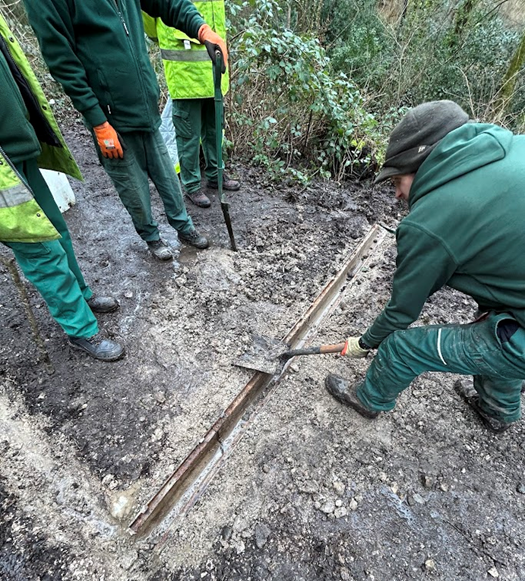
The picture below shows a drainage channel being installed on the path down from Rectory Close.
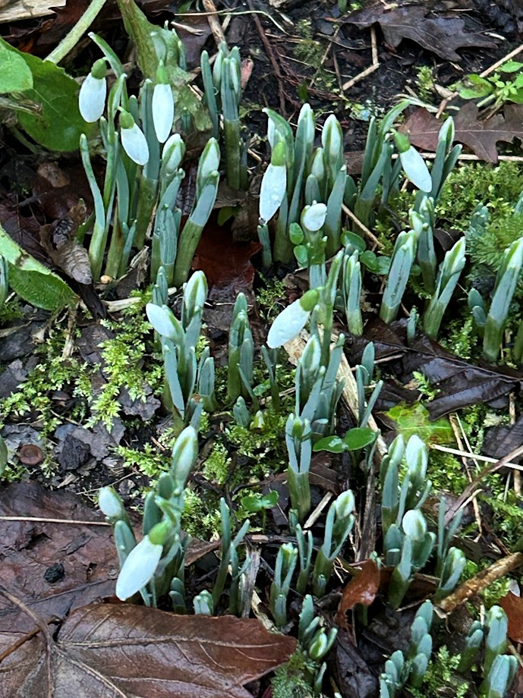
An early sign that Spring is on its way; the snowdrops in the Park are starting to appear in bloom and the best way to view them is to follow the Snowdrop Trail.
The Trail was created several years ago by Friends’ volunteers with the help of school pupils and the wider public using 40,000 bulbs donated by Chorley Council. It is a circular route about half a mile long that can be joined from the main path opposite the Hall. There are waymarking posts to guide you. Further information can be found by clicking the following link:
Friends of Astley Park have been sent a special Christmas card this year. It is from the Mayor and Mayoress of Chorley – Cllr Alistair and Mrs Jane Morwood. The message inside the card is displayed in the top half of the image below, with a picture of the Hall from the card’s front cover at the bottom.
Regular visitors to our website might be able to guess why we have been sent this card. Yes, it is by way of a thankyou from the mayoral couple to our volunteers who led and provided a commentary for the Mayor’s Charity Walk around the park, which happened back in September.
Question: What is the most winter relevant feature of Astley Park?
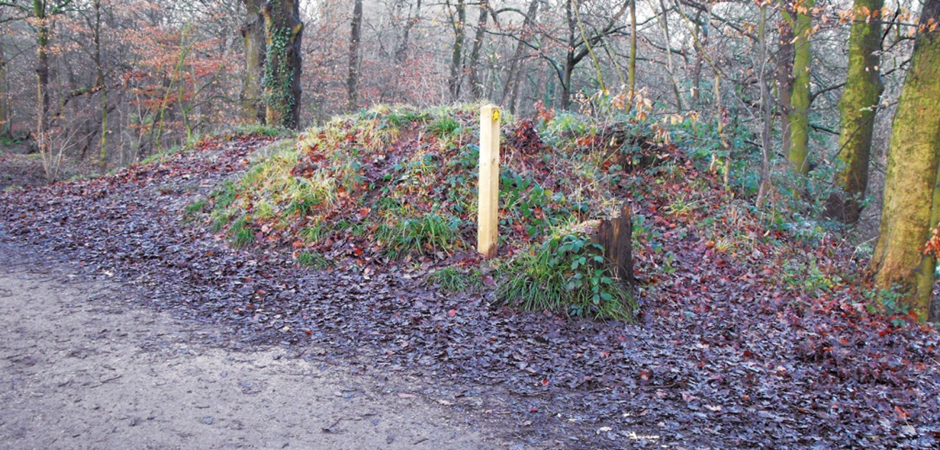
Answer: The Ice House. In the 1800’s when Astley Hall was a private residence, ice was collected from what is now known as the ‘Green Pond’(!) – which in those times of severe winters would freeze over – and be stored for use through the following year. Ice houses were a common feature of stately homes and were partly constructed underground with the top covered by an earth mound for insultation. Located in Great Wood on the Astley Park Trail (Point of Interest 3) all that can be seen of the one in the park is the earth mound, as shown below.
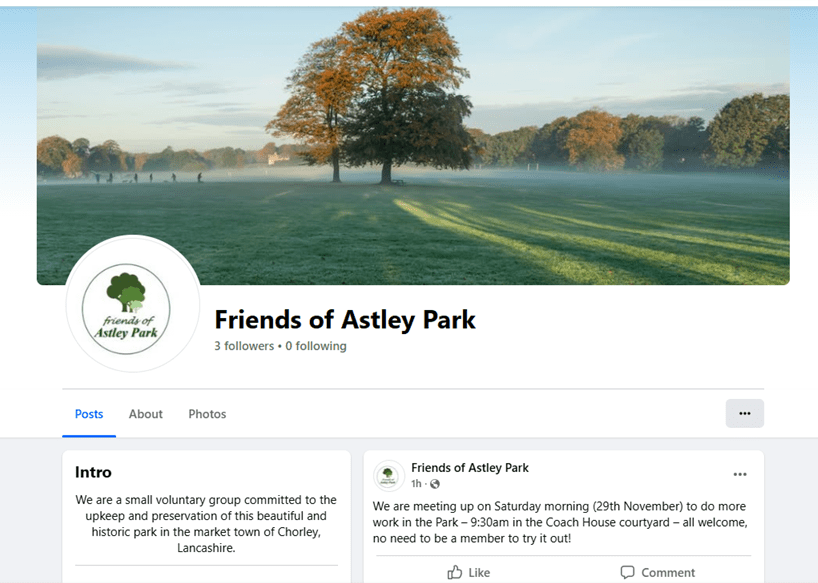
Particular thanks are due to our member Sue Howlett for setting this up. Thanks also to members Sue Giles and Stephen Stewardson for volunteering to also act as administrators. A key intention is to use the Facebook page as an additional channel to guide people interested in what we do to go to our website for all they need to know.
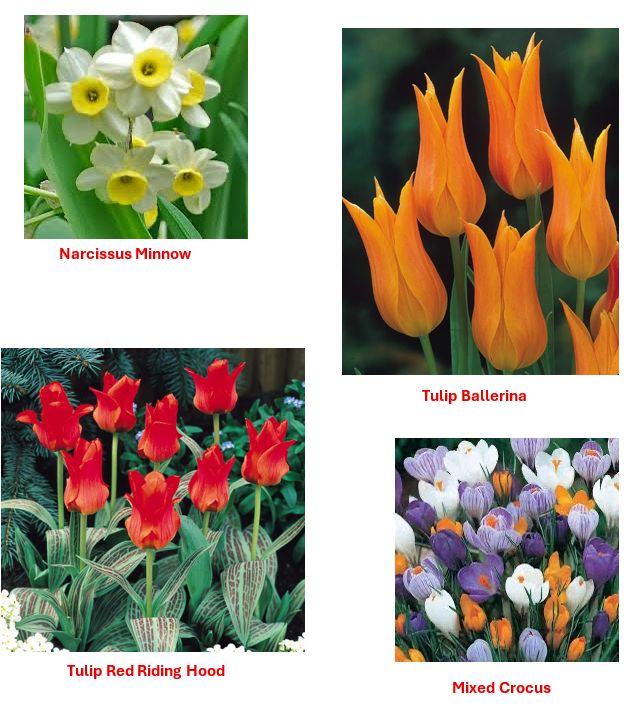
Friends’ volunteers have been busy recently planting spring flowering bulbs at the Sensory Garden, in our 20th Anniversary Flower Bed near the Hall, in the Courtyard Planters and at the Lost Fountain. The bulbs were kindly supplied to us by Chorley Council. The flowers to look out for are pictured below.
The distribution of the bulbs across the four locations is as follows:
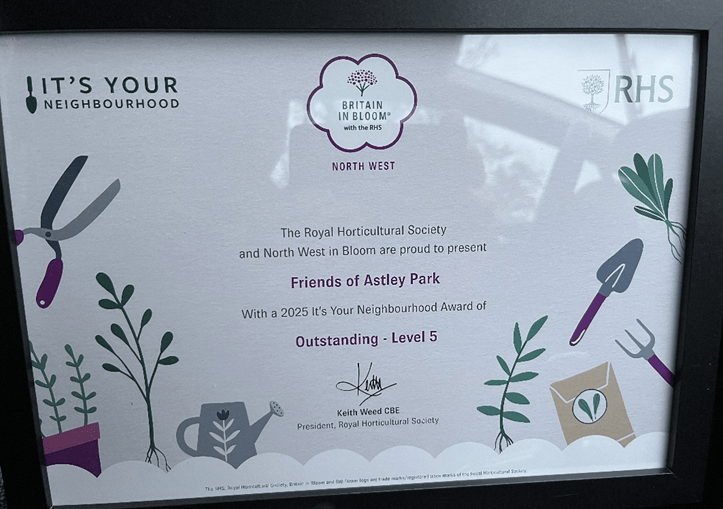
Repeating our success of last year, Friends of Astley Park have once again won big at the 2025 Royal Horticultural Society/North West in Bloom – It’s Your Neighbourhood awards ceremony. We scored a Level 5 – Outstanding mark recognising the various high standard ways we help maintain and improve the Park for the enjoyment of the local community.
Pictured below are Friends’ volunteers Sylvia and David Francis receiving the award, on behalf of all our members, from Councillor Barbara Murray – the Lord Mayor of Liverpool. Sylvia and David are particularly involved in looking after the floral displays in the Coach House courtyard and the Friends’ 20th Anniversary Flower Bed next to Astley Hall.







 Friends of Astley Park