David Francis has produced this article.
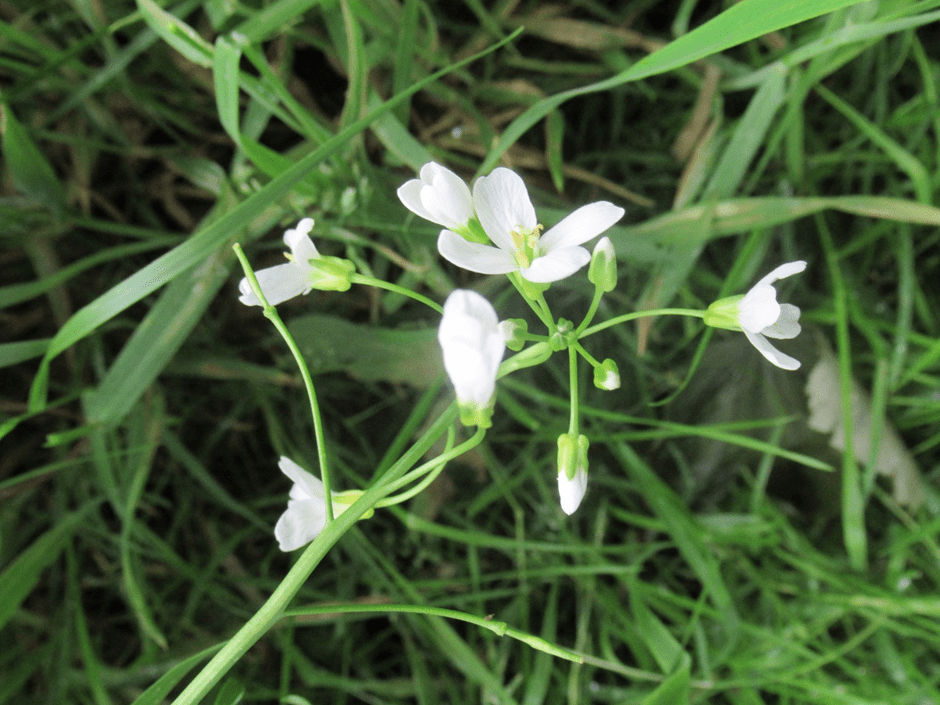
Lady’s Smock or Cuckoo Flower – Cardamine pratensis, a member of the Cabbage family. This specimen was spotted on the main field in an area that had not been mown, showing the benefits of leaving some grass unmown. Cuckoo Flower, also commonly known as ‘Lady’s Smock’, is a pretty, springtime perennial of damp, grassy places like wet meadows, as well as roadside verges. Its pale pink flowers bloom from April to June and are thought to coincide with the arrival of the first Cuckoo – a sure sign that spring has arrived at last. Cuckoo Flower has a rosette of leaves at its base and an upright stem that bears the delicate, small, pale pink or mauve flowers. Each flower has four petals, although double-flowered varieties do appear.
Herb Robert, Geranium robertianum, a member of the Crane’s bill family. This was spotted along the main path heading towards Ackhurst Lodge.Herb Robert is found in a variety of habitats, including woodland and hedgerows but also rocky or exposed areas, scree slopes and coastal areas. Look for it in areas of shade away from acidic soils. Its small, pink flowers mainly appear between May and September, and its leaves emit an unpleasant, mousy scent.

Bramble (blackberry) Rubus fruticosus This is found in many areas of the park. It is hardy and determined! It is often considered a nuisance because it has long and thorny stems and can grow up to 2 metres in height. However, its flowers are a food source for honey bees and bumblebees (may be seen in this photo) and other wild animals. Leaves are eaten by certain caterpillars as well as deer. Its ripe berries are eaten by birds and by foxes and badgers. Bramble is also a habitat for some animals.

Tinder Fungus, Fomes fomentarius. This bracket fungus was spotted on a dead beech tree in Damhead Wood behind Elmwood. Although usually found on dying beech, it may also be found on birch trees in the north of its zone – eg in Scotland.

For the next report click Here

 Friends of Astley Park