
Friends’ volunteers are sending in more and more photographs to be recorded for the 2024 Wildlife Survey of the Park. Just some of those photographs are featured in this third website article on the topic.
Now in late April bluebells are making a great show across many areas including in some parts of Great Wood, as below.

However, a major threat to the floral diversity of the Park is also starting to make its presence known – Himalayan Balsam… As its name suggests this is not a plant originating in Britain. It was first introduced into this country by John Forbes Royle in 1839, then professor of medicine at King’s College London, and within 10 years had escaped the confines of cultivated gardens to quickly become widespread. This invasive species can grow to over 2 metres tall and has attractive pink flowers. It also has some medicinal and culinary uses. However, because of its adverse impact in crowding out native plants Friends of Astley Park along with many other groups and environmental bodies across the country try hard to at least stop its spread by uprooting the then near-mature plants in high summer. Look out for news of our ‘Balsam Bashing’ work on this website later this year.
The photograph below shows the problem – Balsam plants growing-up through Bluebells, soon to dwarf them on the bank of the River Chor near the Lost Fountain.

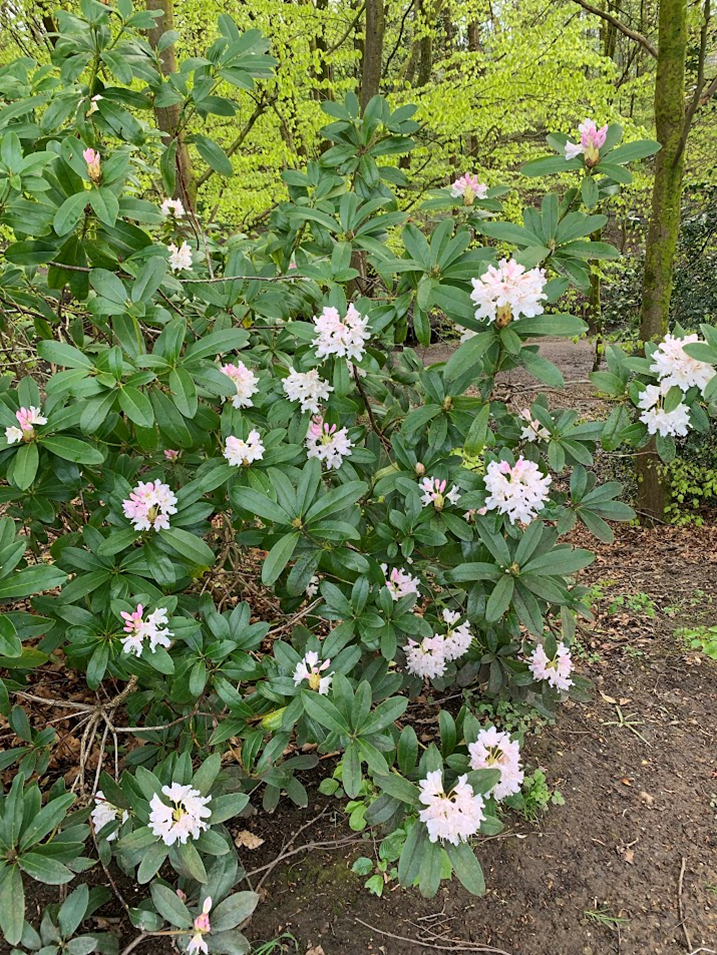
Another ‘alien’ species, that was again introduced into British gardens for their spectacular flowers, is the Rhododendron. These were once more widespread in Astley Park but because of their dominant tendency were largely cleared. Below is a surviving specimen on the edge of Great Wood.
Also often seen in gardens but a wild native plant is the Solomon’s Seal. The picture below was taken in the banking down from Park Road overlooking the Reed Bed.

The photograph below of Wood Sorrel was taken near the Green Pond.

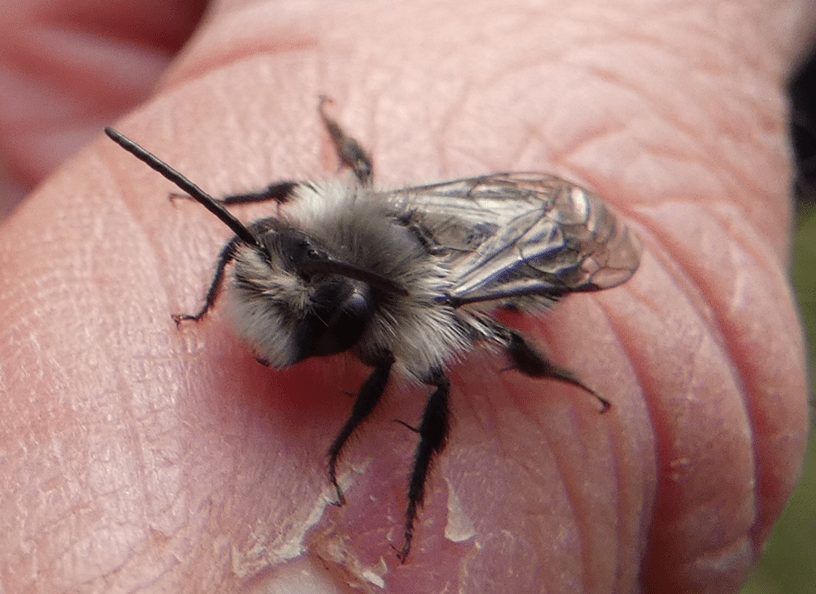
Another interesting find is a colony of Ashy Mining Bees. Although these are common across the UK and Europe they are a little unusual in that they nest in the ground. The one below is pictured on someone’s hand – generally docile they are considered to be safe around children and pets. However, the home of this colony may not be that safe as it is very close to stump of the recently cut down (because diseased) Fern-Leaved Beech tree near the Court Yard and on a well trampled route.
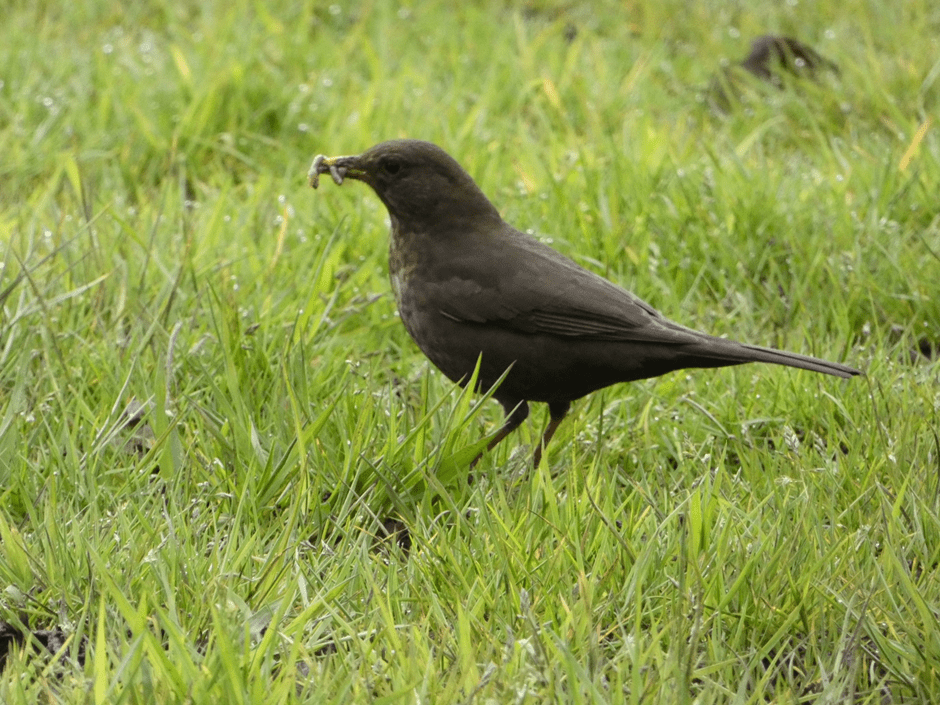
Finally, we have a picture of a bird. It is female Blackbird with an earthworm.
The pictures in this article have also been saved in the Gallery
For the next report click Here

 Friends of Astley Park